
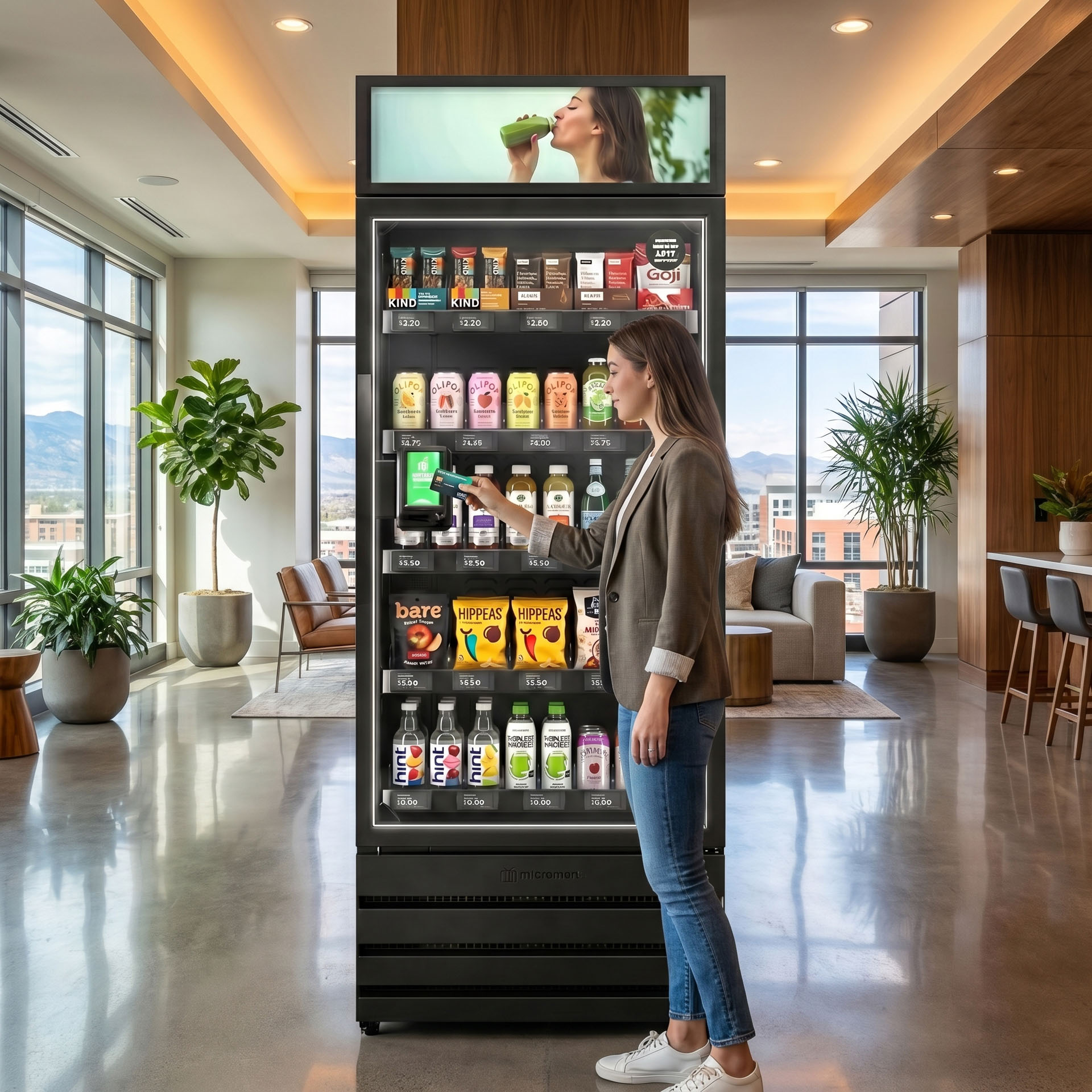
The future of smart vending in Denver real estate is not just more machines in more buildings. It is a shift toward managed, data-informed, cashless onsite retail amenities that support residents, tenants, employees, and guests without adding daily work for property teams.
For Denver property managers, ownership groups, and asset managers, the most useful question is practical: can smart vending make a building more convenient, more competitive, and easier to operate without becoming another vendor headache?
Quick answer
Smart vending is likely to become a more normal part of Denver real estate because it solves a daily convenience problem inside existing buildings. The strongest programs will look less like traditional vending and more like compact smart stores: cashless, glass-front, monitored, locally serviced, and stocked based on actual usage.
The future is not about novelty. It is about whether the amenity earns its place in the building.
Why real estate teams are paying attention
Real estate teams evaluate amenities through a different lens than consumers. A resident might ask whether the cabinet has the drink they want. A property team asks whether the amenity:
- improves the resident or tenant experience
- supports leasing and retention conversations
- fits the look of the building
- requires little or no staff time
- can be serviced reliably
- gives ownership a visible upgrade without major construction
Smart vending is gaining attention because it can check several of those boxes when it is executed well. It can turn a lobby, mailroom, lounge, or fitness-adjacent area into a useful convenience point without building a staffed cafe or full micro market.
From vending machine to smart store amenity
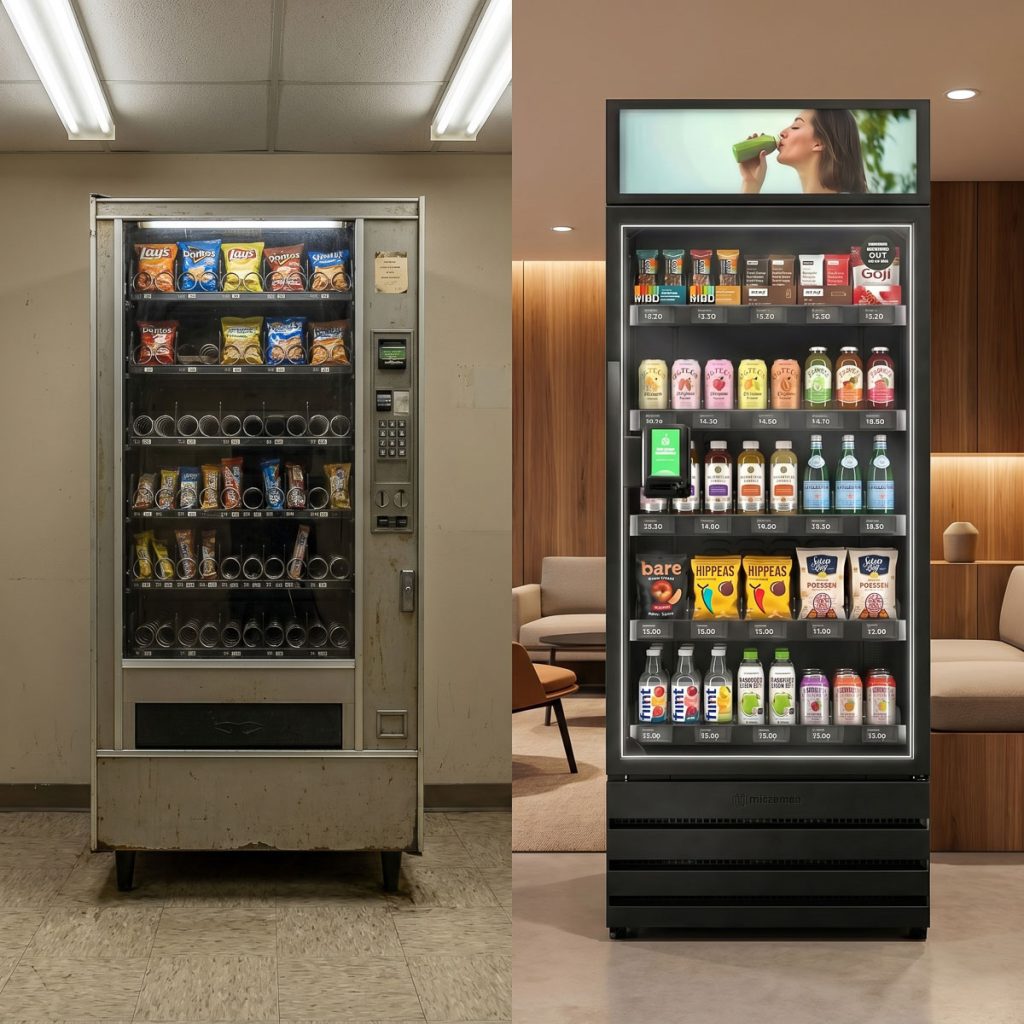
Traditional vending is usually treated as a utility: a machine in a corner that sells packaged snacks or drinks. Smart vending changes the category when the setup is planned as an amenity.
The difference shows up in several ways:
| Traditional Vending | Smart Vending or Smart Store |
|---|---|
| Often cash or card reader attached to a machine | Cashless card and mobile wallet access |
| Limited product presentation | Glass-front merchandising and clearer product visibility |
| Static product plan | Product mix can change based on actual usage |
| Manual service checks | Remote inventory visibility and provider monitoring |
| Usually snack-and-drink focused | Can include meals, frozen items, essentials, and local products where supported |
| Often feels like a break-room fixture | Can be planned around lobby, lounge, mailroom, or fitness design |
The future belongs to setups that feel intentional in the building, not machines that look inherited from an older office break room.
Denver buildings need local service, not just hardware
Denver real estate is varied. A downtown luxury apartment tower, a suburban Class B community, a mixed-use building, a student housing property, and an office building near a transit corridor do not need the same vending plan.
Local fit matters because product demand, delivery access, parking, service timing, building rules, and resident expectations can vary from property to property. A smart vending program that looks good at launch but cannot stay stocked and serviced will lose credibility quickly.
That is why the provider model matters. The machine is only one part of the decision. The property should understand who installs the unit, who stocks it, who monitors performance, who handles payment questions, and who responds when something needs attention.
Data-informed stocking will matter more
The future of vending in real estate will be shaped by product fit. Buildings do not need cabinets filled with items that look good in a proposal but sit untouched for weeks.
Data-informed stocking helps the operator answer practical questions:
- Which items sell at this property?
- Which products are slow-moving?
- Are residents buying meals or mostly drinks?
- Does demand change by time of day?
- Should refrigerated, freezer, or pantry space be adjusted?
- Are late-night purchases meaningful enough to change the product plan?
This is where AI and inventory management can be useful. The point is not to make the article about technology. The point is to stock the property better because the operator has better information.
Multifamily will remain the strongest use case
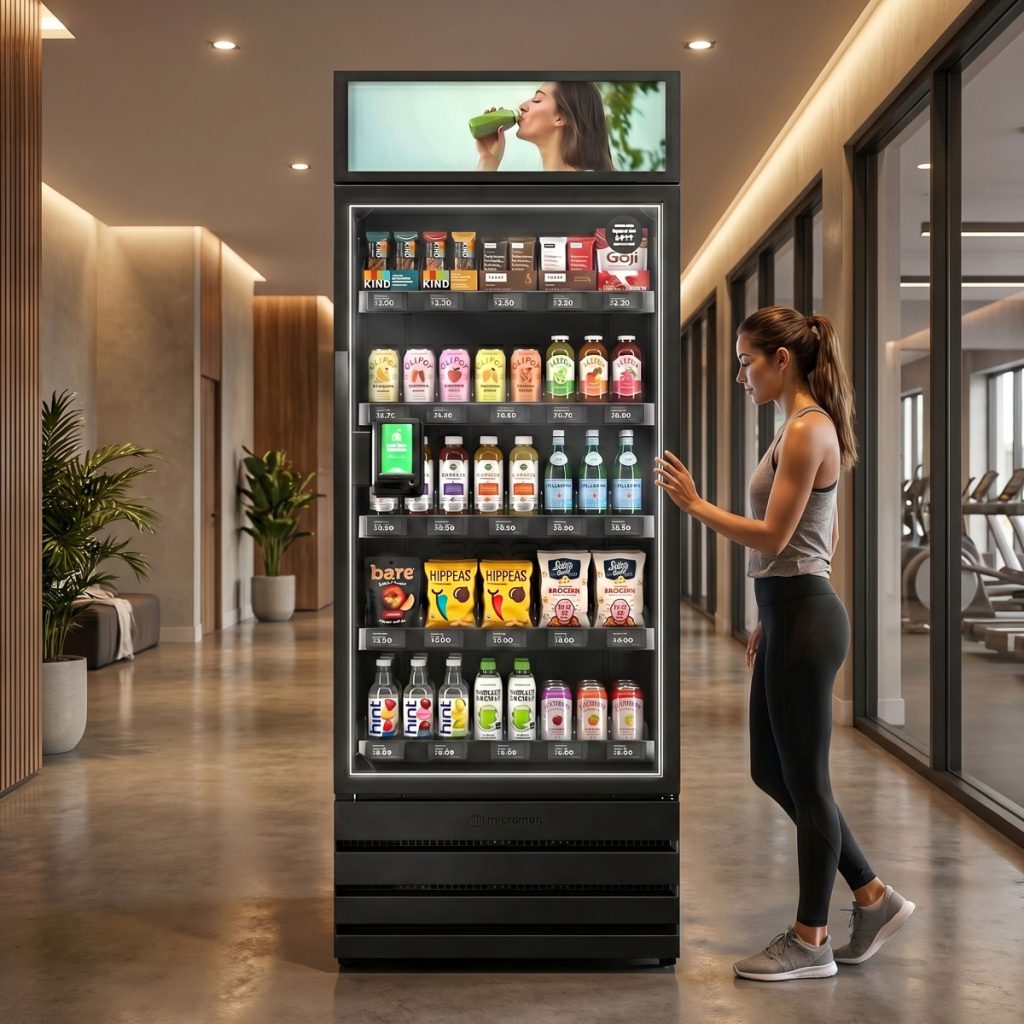
Multifamily properties are a natural fit because residents live with the amenity every day. They may use it after work, during remote-work days, after the gym, during move-in, or late at night when nearby stores are inconvenient.
Smart vending can support:
- resident lounges
- mailrooms and package areas
- fitness-adjacent spaces
- coworking rooms
- lobbies
- student housing common areas
- underused interior corridors with good visibility
The strongest multifamily use cases are not about replacing every nearby retail option. They are about giving residents one useful, reliable option inside the building.
Office and mixed-use properties have a different angle
Office and mixed-use properties may use smart vending differently. Employees and tenants may need afternoon snacks, quick meals, drinks for late meetings, or visitor-friendly convenience near common areas.
For these properties, the decision often depends on:
- employee schedule patterns
- meeting and visitor traffic
- whether the building already has food service
- how much space is available
- whether the amenity serves tenants, guests, or both
- service access and security rules
Smart vending can complement coffee service, break rooms, and nearby retail. It should not be positioned as a universal substitute for a cafeteria or staffed food program when those are truly needed.
The amenity will be judged by daily use
Real estate teams are becoming more disciplined about amenities. A feature that tours well but does not get used can become expensive decoration. A practical amenity that residents use repeatedly can support the everyday experience more quietly.
Smart vending has an advantage because the use case is simple. People understand food, drinks, and essentials. The challenge is execution:
- Is the cabinet easy to find?
- Does it look appropriate for the property?
- Are the products relevant?
- Is it stocked when residents need it?
- Are payment questions handled by the provider?
- Does the property team stay out of the operation?
The future will favor providers that can answer those questions with service, not just software.
Proof will matter more than promises
Real estate teams should be cautious with broad claims about resident satisfaction, rent growth, or ROI unless a provider can explain the evidence behind them. Usage data is more useful than generic promises.
AI Vending’s downtown Denver case study, published March 23, 2026, reported 60.7% resident adoption, 30.4% monthly usage, and 25.9% of transactions between 10 PM and 5 AM at an Avenue5 Residential-managed property. Those numbers do not guarantee the same outcome elsewhere, but they show why property teams should evaluate real resident behavior, not just product lists.
The best future smart vending conversations will be grounded in what residents actually do after installation.
What will not change
Even as the technology improves, the basics will still decide whether the amenity works:
- good placement
- clear ownership of service
- reliable restocking
- appropriate product mix
- safe, visible access
- building-compatible hardware
- realistic expectations
- a provider that responds when needed
Smart vending will not fix a poor location, weak product planning, or a vendor that disappears after installation. Technology can support the operation, but it cannot replace accountability.
Questions Denver real estate teams should ask
Before treating smart vending as part of the amenity roadmap, ask:
- Which resident, tenant, employee, or guest behavior are we trying to support?
- Where would the unit be visible without disrupting the building?
- What product categories fit the audience?
- Who handles stocking, payment support, refunds, maintenance, and product updates?
- Can the product mix change after launch?
- What data will the provider review?
- What proof can the provider share from comparable properties?
- What does the onsite team have to do after installation?
- How will we know whether the amenity is working?
The final question is important. Future-ready amenities need follow-through after the ribbon-cutting.
A practical future, not a futuristic one
The strongest future for smart vending in Denver real estate is practical. It is not about making every building feel like a tech demo. It is about adding a useful onsite retail amenity that can flex with resident and tenant needs while staying off the property team’s workload.
For Denver and Colorado properties, smart vending should be evaluated as part of the broader amenity mix: a daily-use convenience feature with modern payment, managed service, and product decisions guided by real demand.
The right next step is a property-specific conversation about traffic, placement, audience, product categories, and service expectations.
See how AI Vending approaches Denver submarkets.
If you are comparing smart stores, vending, or micro markets across Denver, the Denver location page gives the broader local view across hotels, apartments, offices, and workplace properties.