
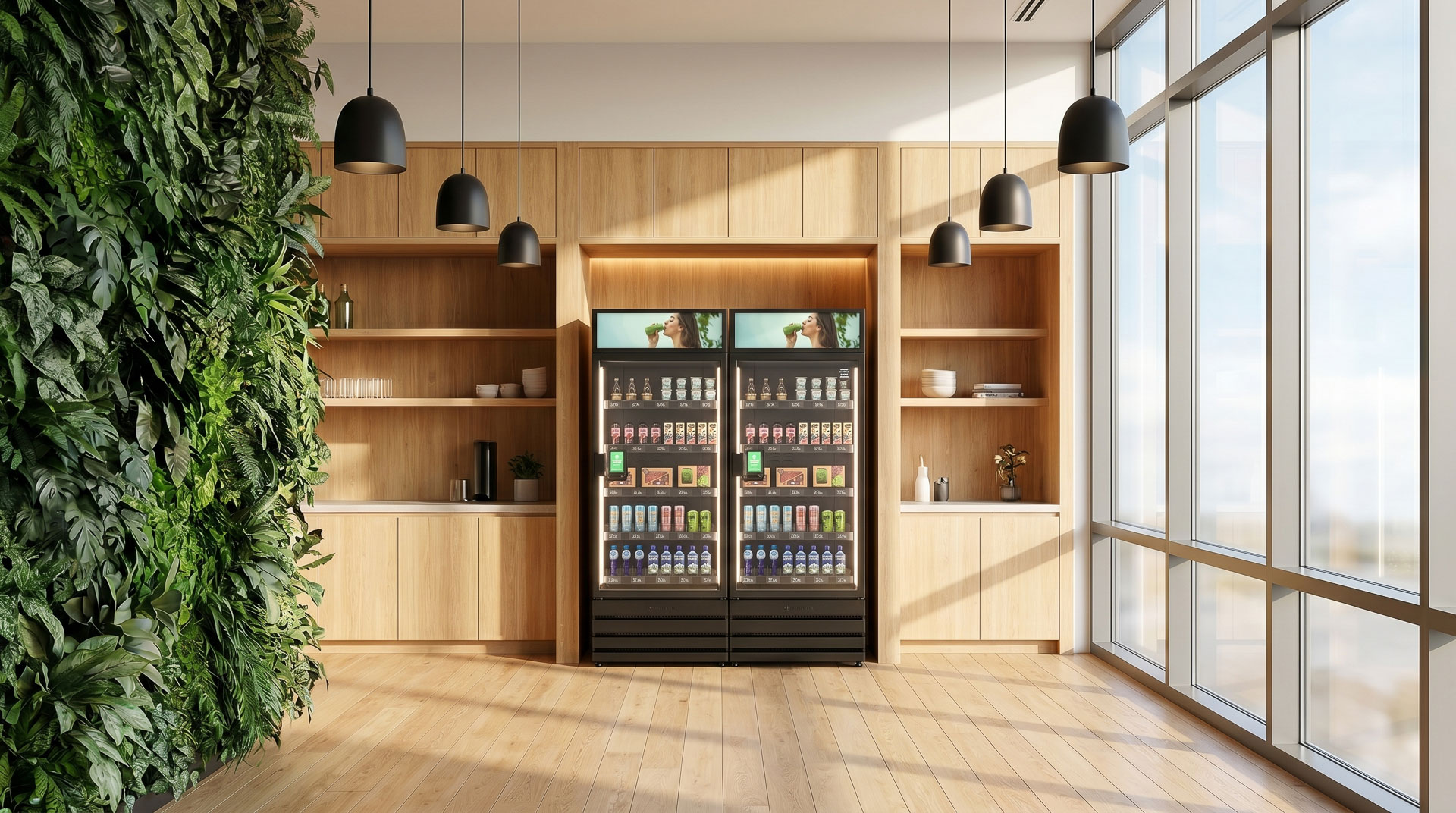
Green vending is about making automated retail more thoughtful: better product planning, less unnecessary waste, smarter restocking, efficient equipment choices, and product assortments that fit the people who actually use the amenity. It is not enough to put a few “natural” snacks in a machine and call it sustainable.
For property and facility teams, the practical question is whether an automated retail program can improve convenience while reducing avoidable waste, unnecessary service trips, and poorly matched inventory.
Quick answer
Green vending uses data-informed stocking, cashless smart store technology, responsible product selection, and managed service practices to make onsite retail more efficient. The strongest sustainability story comes from matching products to real demand, rotating inventory before it expires, choosing appropriate equipment, and avoiding overstocked machines that no one uses.
Sustainability claims should be specific and supportable. A vending provider should explain what it actually does, not rely on vague green language.
What green vending should mean
Green vending should be practical. It can include:
- stocking products based on actual demand
- reducing expired or slow-moving inventory
- offering better-for-you or locally relevant options when demand supports them
- using cashless systems that support remote monitoring
- planning restocks efficiently
- choosing equipment that fits the location and product mix
- avoiding oversized setups that waste space and energy
The best version is not a marketing label. It is an operating discipline.
|
Sustainability Lever |
What It Means |
Buyer Question |
|---|---|---|
|
Demand-based stocking |
Products change based on what people buy |
How often do you review inventory data? |
|
Waste reduction |
Slow or expiring products are addressed before they pile up |
What happens to products that do not sell? |
|
Equipment fit |
Cabinet type matches traffic, space, and refrigeration needs |
Why is this setup the right size? |
|
Local or regional products |
Local items are stocked when demand and logistics support them |
How do local products earn shelf space? |
|
Efficient service |
Restocking follows real need, not guesswork |
How do you plan service visits? |
|
Claim discipline |
Health, dietary, and sustainability claims are documented |
What proof supports the claim? |
Why automated retail creates waste when it is poorly managed
Traditional vending can waste products when machines are stocked from a fixed plan instead of actual use. If the same items sit for weeks, the provider eventually has to remove them, discount them, or replace them. That creates avoidable waste and weakens the resident or employee experience.
Poor product fit also wastes space. A machine full of items people do not want is not useful, even if it looks stocked.
Smart vending can help because the operator can see what sells and what does not. That information can guide restocking and product changes over time.
Data-informed stocking is the core sustainability lever
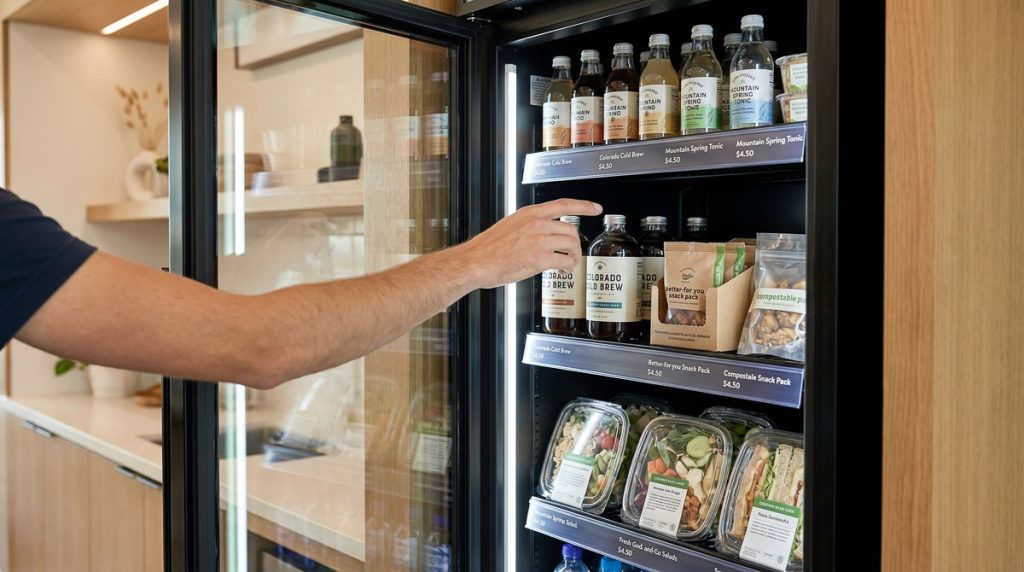
The most useful sustainability improvement is not the most dramatic one. It is stocking the right products in the right amounts.
When a provider reviews usage data, the product mix can shift away from slow-moving items and toward products residents, employees, or tenants actually buy. That can reduce stale inventory and make the amenity more useful.
The provider should be able to answer:
- Which products are selling?
- Which products are slow?
- How often is inventory reviewed?
- What happens before products expire?
- Can the product mix change by season or audience?
- How does restocking respond to actual usage?
If the provider cannot answer those questions, the sustainability story is probably too vague.
Local and better-fit products
Local products can support a stronger amenity when they match demand, shelf life, and service requirements. A Colorado property may benefit from recognizable local brands or products that fit resident preferences, but local should not mean random.
Products need to earn their place. If an item does not sell or creates operational issues, it should be replaced.
Better-fit products can also include dietary-preference options, lower-sugar beverages, protein snacks, fresh meals where refrigeration is available, or practical essentials. The key is not to overclaim. Product labels and supplier information should support any health, dietary, or sustainability claims.
Packaging and product claims
Packaging is part of the sustainability conversation, but it needs careful handling. A product may use recyclable packaging, recycled content, plant-based materials, or other environmental claims, but those claims should come from the brand or supplier documentation.
Property teams should be cautious with broad language such as eco-friendly, zero waste, or guilt-free unless the provider can explain exactly what the claim means. It is better to say the program can include products with documented sustainability attributes than to make a claim the property cannot verify.
The same rule applies to health and dietary claims. Use manufacturer labels and documentation, not assumptions.
Equipment fit matters
Sustainability is also about choosing the right format. A large setup in a low-traffic area may waste space and energy. A smaller modular smart vending setup may be a better fit if the property needs a compact amenity with controlled access and managed inventory.
The equipment should match:
- expected traffic
- product categories
- refrigeration needs
- available space
- service access
- indoor placement requirements
- power and ventilation
Overbuilding the amenity can be just as wasteful as understocking it.
Restocking and service routes
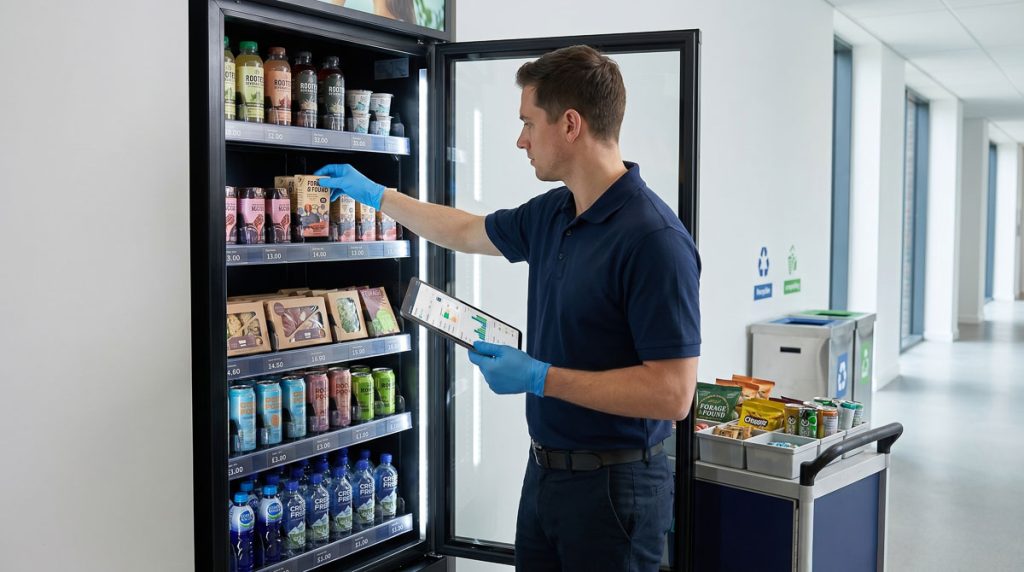
Restocking is part of the sustainability conversation. A provider that restocks blindly may make unnecessary trips or miss the products that actually need attention. A provider that monitors inventory can plan service around real need.
That does not mean every trip can be eliminated. It means restocking should be tied to usage, product life, and service quality instead of guesswork.
For property teams, the question is simple: does the operator use data to make restocking smarter?
The service model behind greener vending
Sustainability depends on follow-through. Product fit, restocking, product rotation, and service quality have to keep improving after installation.
In AI Vending’s full-service model, the property provides space and power while the operator monitors inventory, restocks, maintains the unit, and adjusts the product mix based on use. That keeps accountability with the provider, where the product and service decisions are actually made.
Questions to ask a green vending provider
Before accepting sustainability claims, ask:
- How do you reduce expired or wasted inventory?
- How often do you review sales and product performance?
- Can you adjust products by location, season, or audience?
- What product claims are verified by packaging or supplier documentation?
- Can you include local or regional products when demand supports them?
- How do you decide between refrigerated, freezer, and pantry equipment?
- How do you plan restocking routes?
- What does the property team have to do after installation?
- How do you keep the machine clean, stocked, and presentable?
Specific answers matter more than broad green language.
What to avoid
Avoid claims that are too broad, such as saying a vending program is sustainable without explaining why. Avoid implying that every local product is automatically better. Avoid stocking products for image rather than demand. Avoid fresh food unless the provider can manage rotation, refrigeration, and waste.
Also avoid making residents do the work. A sustainability-focused amenity should not require the property team to track inventory, police product choices, or manage waste.
Make sustainability practical
Green vending works when sustainability is treated as a practical operating standard. The provider should stock what people use, reduce avoidable waste, choose the right equipment, and keep the amenity useful over time.
For property teams, the right question is not whether the vending program sounds green. It is whether the provider can explain how the program makes better product, restocking, equipment, and service decisions.AI Vending can help Colorado properties evaluate a smart vending setup that supports convenience, product fit, and responsible automated retail.