
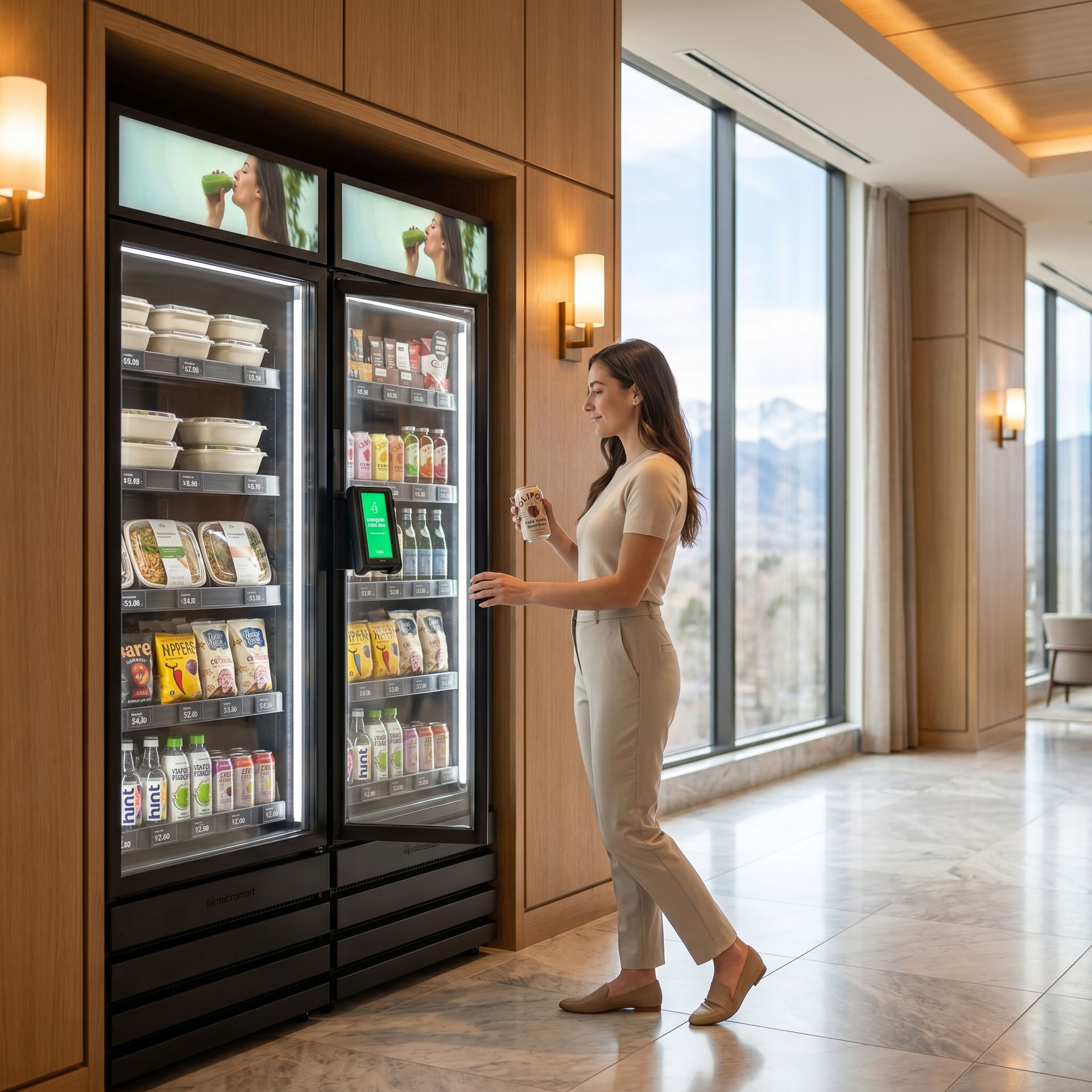
Smart vending machines in apartment buildings work by combining cashless payment, controlled product access, remote inventory monitoring, and provider-managed restocking into one onsite convenience amenity. Residents get 24/7 access to drinks, snacks, meals, and essentials inside the building, while the property team should not have to manage inventory, troubleshoot payments, or run a small retail operation.
For multifamily teams, the important question is not whether the machine is “smart.” The important question is whether the setup improves resident convenience, fits the building, stays secure enough for the location, and remains fully managed after installation.
Quick answer
In a strong apartment smart vending setup, a resident authorizes a card or mobile wallet, opens a locked smart cabinet, takes one or more products, closes the door, and receives a digital receipt. Behind the scenes, the system tracks product movement, supports remote inventory visibility, and helps the operator restock based on actual use.
The property usually provides an approved indoor location and power. The vending operator should handle equipment, product planning, stocking, service, payment support, and ongoing adjustments.
What residents experience
Residents do not think about smart vending as a technology project. They experience it as a practical convenience inside the building.
A resident might use it when:
- they get home late and do not want to leave again
- they need a quick breakfast before work
- they want a drink after the gym
- they need a meal during a work-from-home day
- they run out of a small essential
- they want something during a weekend or after leasing-office hours
The best smart vending experience feels closer to a compact onsite market than a traditional spiral machine. The resident can see products through a glass-front cabinet, pay without cash, take multiple items, and leave without waiting for staff.
How the payment and access flow works
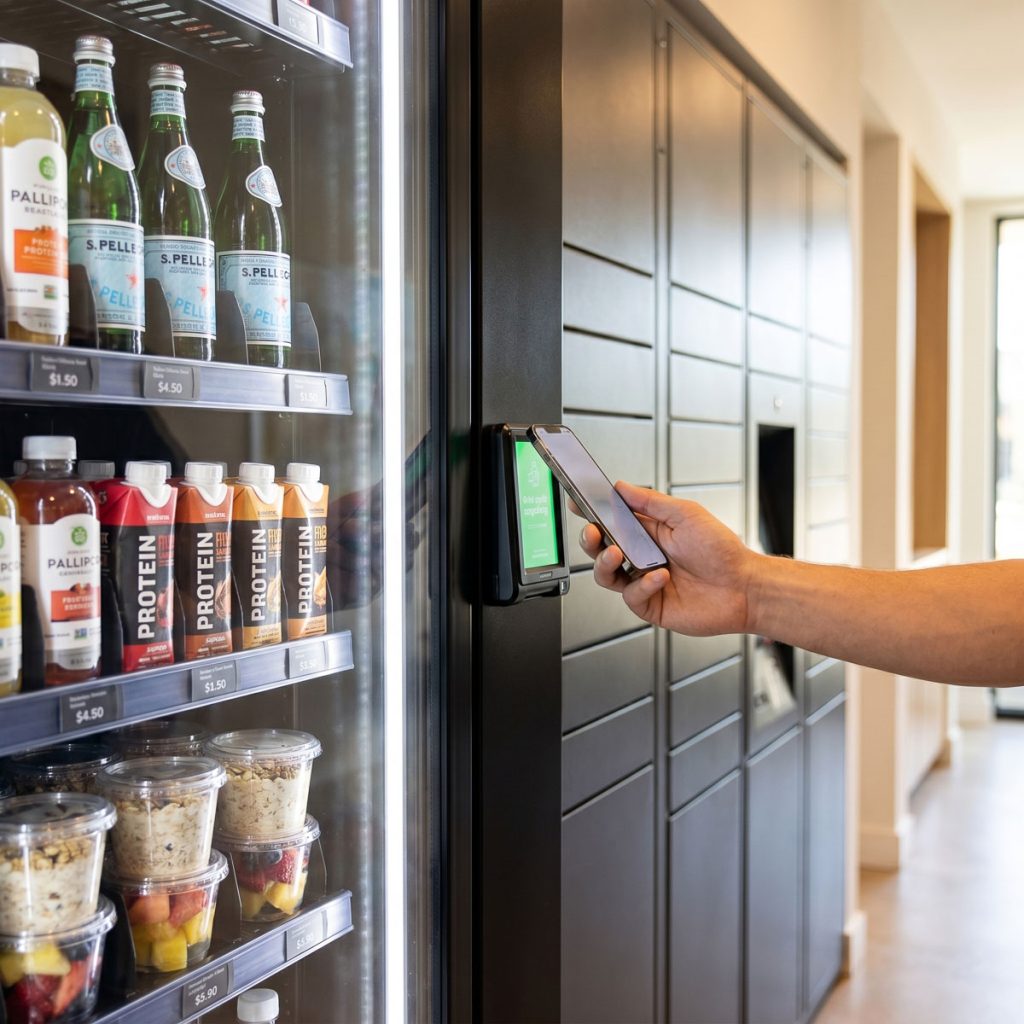
Most modern smart vending programs use a controlled-access flow:
- The resident taps, inserts, or swipes a card, or uses a supported mobile wallet.
- The system authorizes the payment method.
- The cabinet unlocks.
- The resident opens the door and selects products.
- The resident closes the door.
- The system finalizes the transaction and sends a receipt.
That flow matters in apartment buildings because products stay locked until a payment method is authorized. It also removes cash collection from the property and reduces common issues tied to bills, coins, and change.
What makes the machine smart
“Smart” should mean more than a card reader. A useful apartment smart vending program normally includes:
- cashless payment
- controlled cabinet access
- product recognition or transaction tracking
- remote inventory visibility
- usage-informed restocking
- digital receipts
- service alerts or monitoring
- product mix adjustments over time
The practical value is not the technology by itself. The value is that the operator can see what is selling, what is slow, what needs restocking, and what should change for that specific building.
Where smart vending fits in an apartment building
Placement has a major effect on performance. The unit should be easy for residents to see, safe to access, and simple for the provider to service.
Common apartment locations include:
| Location | Why It Can Work | What To Check |
|---|---|---|
| Lobby or entry area | High visibility and strong tour impression | Traffic flow, noise, appearance, and access control |
| Mailroom or package area | Residents already visit regularly | Crowding, service access, and lighting |
| Resident lounge | Fits social and work-from-home routines | Product mess, cleaning expectations, and visibility |
| Fitness-adjacent area | Supports hydration, protein, and post-gym use | Humidity, airflow, and product fit |
| Laundry room | Useful in older properties with repeat resident visits | Space, power, and whether the room feels secure |
| Parking-level interior corridor | Can support late-night use | Lighting, visibility, and resident comfort |
Outdoor-only areas, hidden corners, and poorly ventilated spaces usually create problems. Refrigerated and freezer cabinets also need proper indoor placement, airflow, and reliable power.
Product mix should match resident behavior
Apartment vending works best when the product mix is built around real routines, not a generic snack list.
| Resident Need | Product Examples | Operational Consideration |
|---|---|---|
| Morning routine | Coffee drinks, breakfast bars, yogurt where supported | Refrigeration and restock timing |
| Work-from-home day | Meals, sparkling water, snacks, functional drinks | Midday demand and product variety |
| Fitness use | Water, electrolytes, protein snacks | Placement near gym traffic |
| Late-night convenience | Meals, snacks, drinks, essentials | 24/7 access and lighting |
| Local preference | Colorado or regional products where practical | Shelf life, demand, and supplier reliability |
The mix should change as the operator learns the building. If residents ignore a product, it should not stay in the cabinet just because it was part of the first plan.
What the property team should not have to do
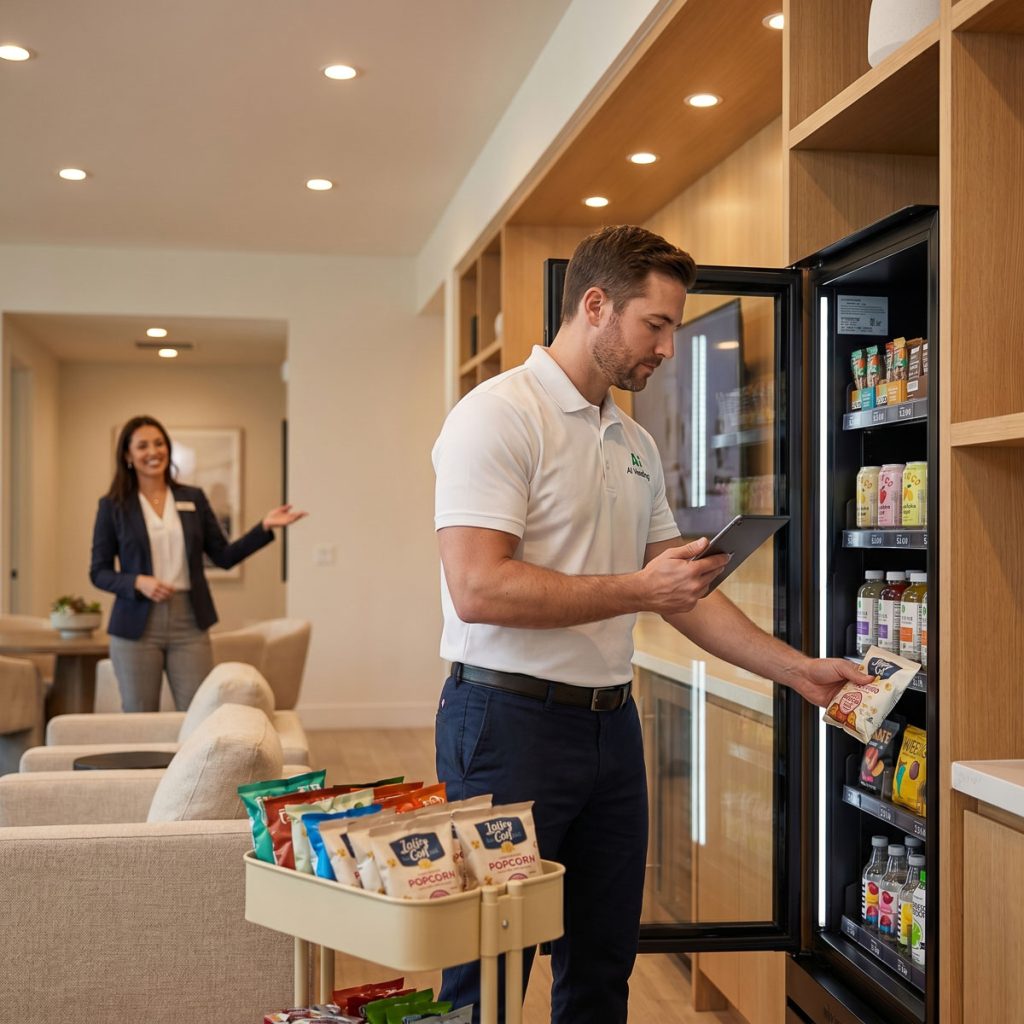
The service model is the part many apartment teams care about most. A smart vending amenity should not become another task for the leasing office, maintenance team, or community manager.
The provider should handle:
- delivery and installation
- product curation
- inventory monitoring
- restocking
- payment support
- refunds or transaction questions
- service and maintenance
- product changes
- cleaning expectations tied to the unit
The property should not have to buy snacks, check stock, chase payment issues, or decide which products to remove. If a vendor expects onsite staff to manage those details, the amenity is not truly hands-off.
How remote inventory management helps
Remote inventory management lets the provider see product movement without waiting for a resident complaint or a manual check. That matters because apartment demand changes by location, season, and resident mix.
The operator can use inventory information to:
- restock before popular products are empty
- reduce slow-moving items
- add more meal options if residents buy them
- adjust the mix around move-ins or resident events
- avoid overfilling low-demand categories
- identify service issues faster
Inventory data does not replace good service. It gives the provider better information so service can be more precise.
What smart vending changes for property operations
For property managers, the appeal is practical. Smart vending can add a daily-use amenity without a renovation project, staffing model, or managed store.
It can help a building:
- improve resident convenience
- make underused common space more useful
- support after-hours needs
- add a modern amenity residents understand quickly
- reduce reliance on nearby offsite convenience options
- create a cleaner alternative to outdated vending
The strongest setups are planned like an amenity, not dropped into a leftover corner.
A Denver apartment proof point
AI Vending’s downtown Denver case study, published March 23, 2026, gives one useful example of how residents may use a managed smart store amenity. The case study reported 60.7% resident adoption, 30.4% monthly usage, and 25.9% of transactions between 10 PM and 5 AM at an Avenue5 Residential-managed property.
Those numbers should not be treated as a guarantee for every building. They are useful because they show why apartment teams should evaluate after-hours access, meal options, and product fit instead of thinking only about daytime snack use.
Questions to ask before installation
Before adding smart vending to an apartment building, ask:
- What cabinet format fits our space?
- Is the unit designed for indoor use only?
- What power, airflow, and connectivity are required?
- Who handles restocking, payment support, refunds, and maintenance?
- How often is inventory reviewed?
- Can the product mix change based on resident behavior?
- What happens when a product does not sell?
- How is the cabinet serviced without disrupting residents?
- What does the property team have to do after launch?
- How will the provider evaluate whether the location is working?
The answers should make the operating model clear. If the property team is still responsible for routine vending work, the proposal needs another look.
What can go wrong
Smart vending can underperform when the location is hidden, the product mix is generic, the provider does not restock reliably, or the cabinet is treated as a novelty rather than an amenity.
Common mistakes include:
- choosing a low-visibility location
- ignoring power, airflow, or service access
- stocking products that do not match residents
- using a provider that cannot support the property locally
- relying on the property team to notice inventory problems
- making the setup look out of place in a premium common area
A smart vending program is only as good as its ongoing operation.
Make it useful after the first week
The launch matters, but long-term usefulness matters more. Residents will try a new amenity once if it is visible. They will keep using it only if the cabinet stays stocked, clean, easy to use, and relevant to their routines.
For apartment buildings, smart vending works when technology, placement, products, and service are planned together. The best setup should feel simple to residents and almost invisible to the property team.
For a Denver or Colorado apartment community, the next step is a site-specific review of resident traffic, common-area options, power, visibility, and product needs before choosing the cabinet mix.