
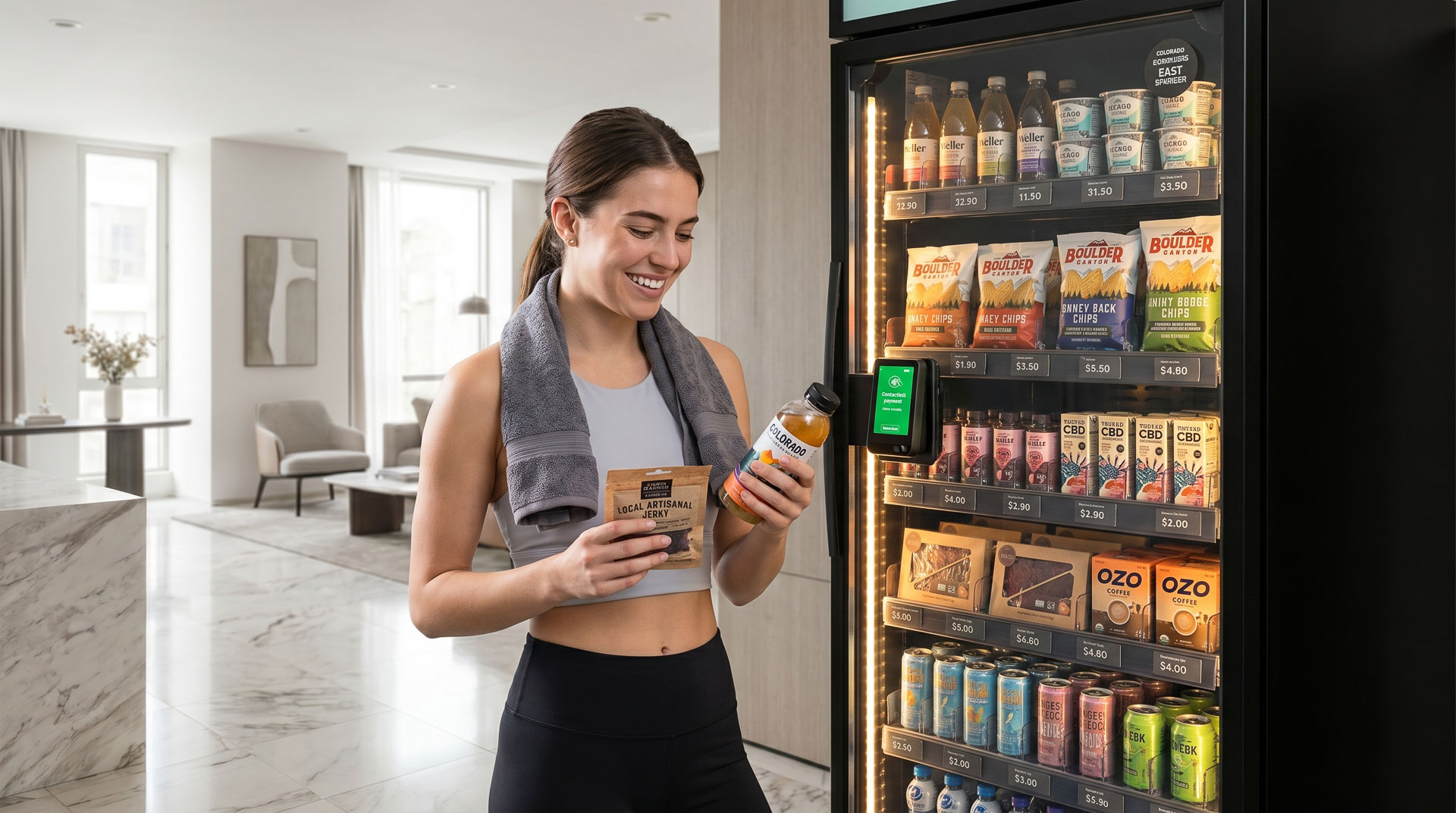
Hyper-local vending featuring Colorado brands gives residents, tenants, and employees a more relevant onsite retail experience than a generic snack machine. For Denver properties, the strongest version pairs local product curation with a fully managed smart vending model, so the property can offer a more distinctive amenity without taking on sourcing, stocking, payment support, or service work.
The buyer question is not whether every item must be local. The better question is whether the amenity feels connected to the building, the neighborhood, and the people who use it while still staying reliable day to day.
Quick answer
Hyper-local vending uses smart vending or smart store equipment to feature a thoughtful mix of Colorado-made snacks, drinks, meals, and essentials alongside proven national products. It works best when the provider manages product selection, restocking, inventory monitoring, payment support, and product changes instead of asking the property team to run the program.
For property managers, the value is twofold: the amenity feels more local and premium, and the operation stays off the onsite team’s workload.
What hyper-local vending really means
Hyper-local vending does not mean filling a cabinet only with niche products. A useful onsite retail amenity still needs the basics people buy every day: water, coffee drinks, protein options, quick meals, familiar snacks, and small essentials.
The local layer should make the mix better, not less practical. It can add Colorado-made snacks, regional beverage options, healthier grab-and-go items, or seasonal products that fit the building’s audience. The goal is to make the amenity feel intentional rather than random.
That distinction matters because residents and employees quickly learn whether an amenity is curated or simply stocked. A smart store that combines useful staples with local discovery can feel more like a small neighborhood convenience point than a forgotten vending machine.
Why Colorado brands can strengthen the amenity
Local product curation gives a property one more way to show that it understands its residents, tenants, or employees. That is especially useful in Denver, where many buildings compete on lifestyle, convenience, and neighborhood connection.
Colorado brand placement can help in practical ways:
- It gives residents and employees something more interesting than a standard vending assortment.
- It can support a building’s local identity without requiring a staffed market.
- It gives the operator more room to adjust the mix around real buying behavior.
- It makes the amenity easier to talk about during tours and resident communications.
The key is restraint. Local products should earn their place through demand, quality, shelf life, pricing, and service fit. A product being local is a good reason to test it, not a reason to keep it forever if residents do not buy it.
Product categories that usually work
The best local mix depends on the property type, traffic pattern, refrigeration, and audience. A downtown apartment lobby may need a different assortment than an office break area, warehouse, student housing property, or fitness-adjacent space.
| Product category | Why it can work | What to watch |
|---|---|---|
| Colorado snacks | Easy local discovery and broad appeal | Keep pricing and shelf life practical |
| Cold coffee and beverages | Useful for offices, lobbies, and coworking spaces | Avoid overloading slow-moving flavors |
| Protein and wellness-oriented items | Fits fitness-adjacent and workday routines | Do not make unsupported health claims |
| Refrigerated meals | Strong for late-night and remote-work needs | Requires tighter rotation and demand tracking |
| Everyday essentials | Helps residents solve small problems onsite | Keep the assortment focused, not cluttered |
A good program starts with a clear hypothesis, then adjusts based on sales. The property should not have to guess which local products will work. The operator should monitor demand and refine the assortment.
How smart vending makes local curation easier
Traditional vending often struggles with local products because the machine is treated as a static assortment. Once the planogram is set, it may stay unchanged for too long. That is not how local curation should work.
Smart vending makes the local layer more manageable when the provider can track inventory remotely, see what is moving, restock proactively, and rotate products without turning every change into a property-team project.
The practical advantages are:
- more visibility into what residents or employees actually buy
- faster removal of slow-moving items
- better support for refrigerated, pantry, or freezer formats
- cleaner cashless checkout
- less manual reporting for the onsite team
The technology only matters if it improves the operation. For the buyer, the result should be a better stocked, more relevant amenity with less staff involvement.
Where hyper-local vending fits best
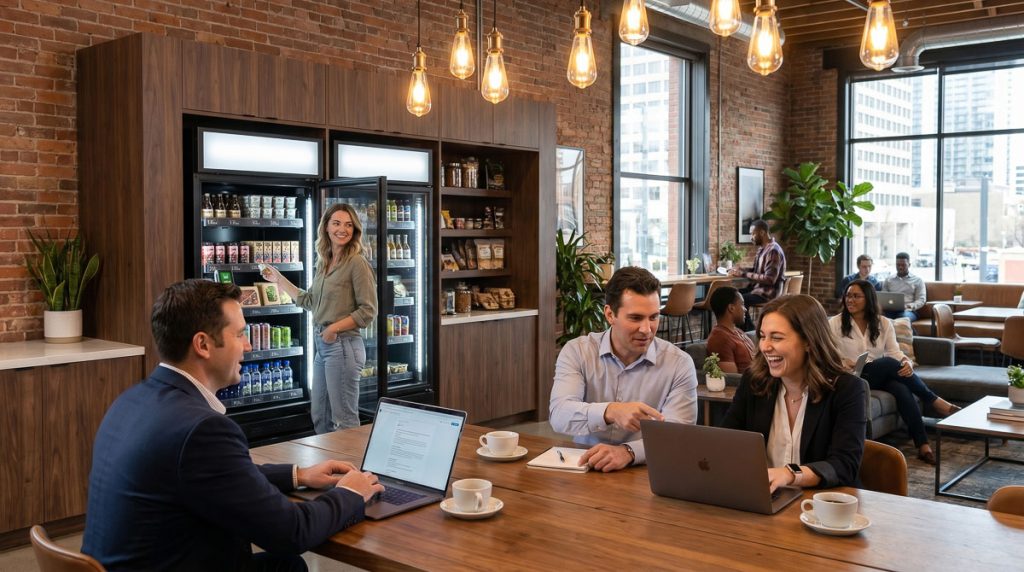
Hyper-local vending tends to fit buildings where the amenity is visible and where residents, tenants, or employees already pause during the day. Strong placements include lobbies, mail areas, resident lounges, coworking areas, clubrooms, fitness-adjacent spaces, office break rooms, and high-traffic corridors.
The right location should pass a simple test: would someone naturally stop here for a drink, snack, quick meal, or small essential? If the answer is no, local products will not save the setup. Placement still drives usage.
For Denver properties, local curation can be especially useful in buildings that want a more premium feel without adding a staffed cafe or market. It gives the property a visible amenity story while the operator handles the daily details.
What to ask before choosing a provider
A property team should ask specific questions before approving a hyper-local vending program:
- Which Colorado or regional categories can you stock reliably?
- How do you decide whether a local product stays, rotates, or gets removed?
- Who handles product sourcing, restocking, refunds, payment support, and service?
- Can the mix include refrigerated, pantry, or freezer products if demand supports it?
- How often do you review sales data and make product changes?
- How do you avoid turning local curation into extra work for the property staff?
The best answer is operational, not promotional. A provider should be able to explain how local products are selected, tested, monitored, and supported.
When a local-first vending mix may not be the right fit
Hyper-local vending is not the right answer for every location. A very low-traffic placement may need a smaller, simpler product set. A building with limited power, poor visibility, or no indoor common area may need a different amenity plan. Some local products may also be too expensive, too perishable, or too operationally fragile for an unattended retail setting.
Property teams should avoid any provider that treats local products as a branding shortcut while pushing inventory decisions or service issues back onto onsite staff. The program should feel local to the end user and simple to the property team.
How AI Vending can support a local program
AI Vending is a Colorado-based smart store operator that installs, stocks, monitors, and maintains smart vending amenities for properties. That matters for local vending because curation only works when the operator can manage the full cycle: product selection, restocking, service, payment support, and product changes.
For buildings that want a more Colorado-connected amenity, the practical starting point is a site survey. The provider should look at traffic, placement, power, audience, refrigeration needs, and product goals before recommending a cabinet setup or local product mix.
FAQs
Does hyper-local vending mean every product must be from Colorado?
No. The strongest programs usually combine Colorado products with reliable staples. The local items add identity and discovery, while the staple products protect everyday usefulness.
Can local products work in apartment buildings?
Yes, when the location has enough traffic and the products match resident behavior. Lobbies, mailrooms, coworking areas, lounges, and fitness-adjacent spaces are often better fits than hidden corners.
Who manages the local product mix?
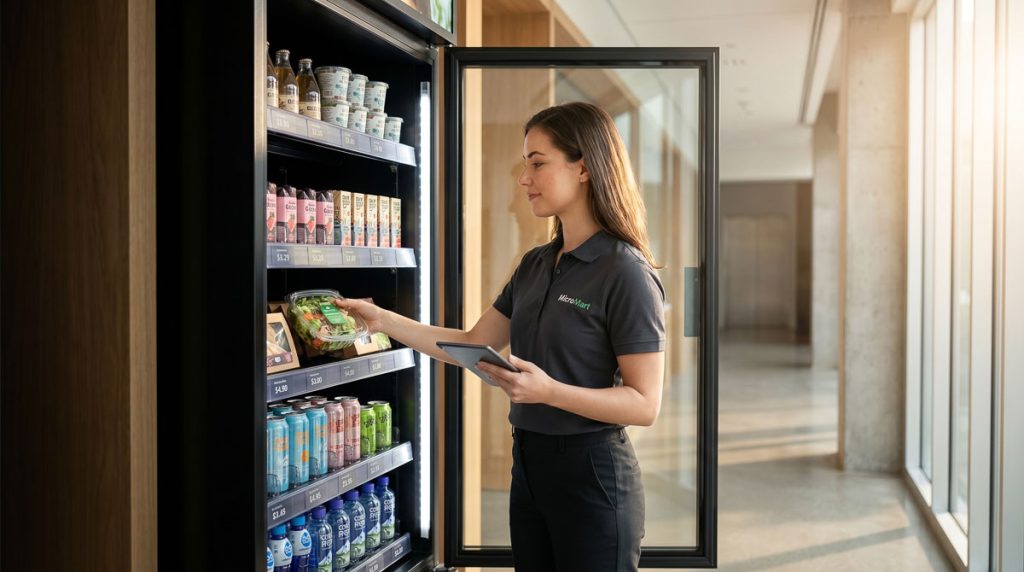
In a fully managed model, the operator manages product selection, restocking, monitoring, service, and support. The property should not be responsible for buying inventory or tracking sales.
What should a property do next?
Start with the amenity goal and location. If the building wants a more local, premium convenience point, talk to AI Vending about what a Colorado-focused smart store mix could look like for the property.