
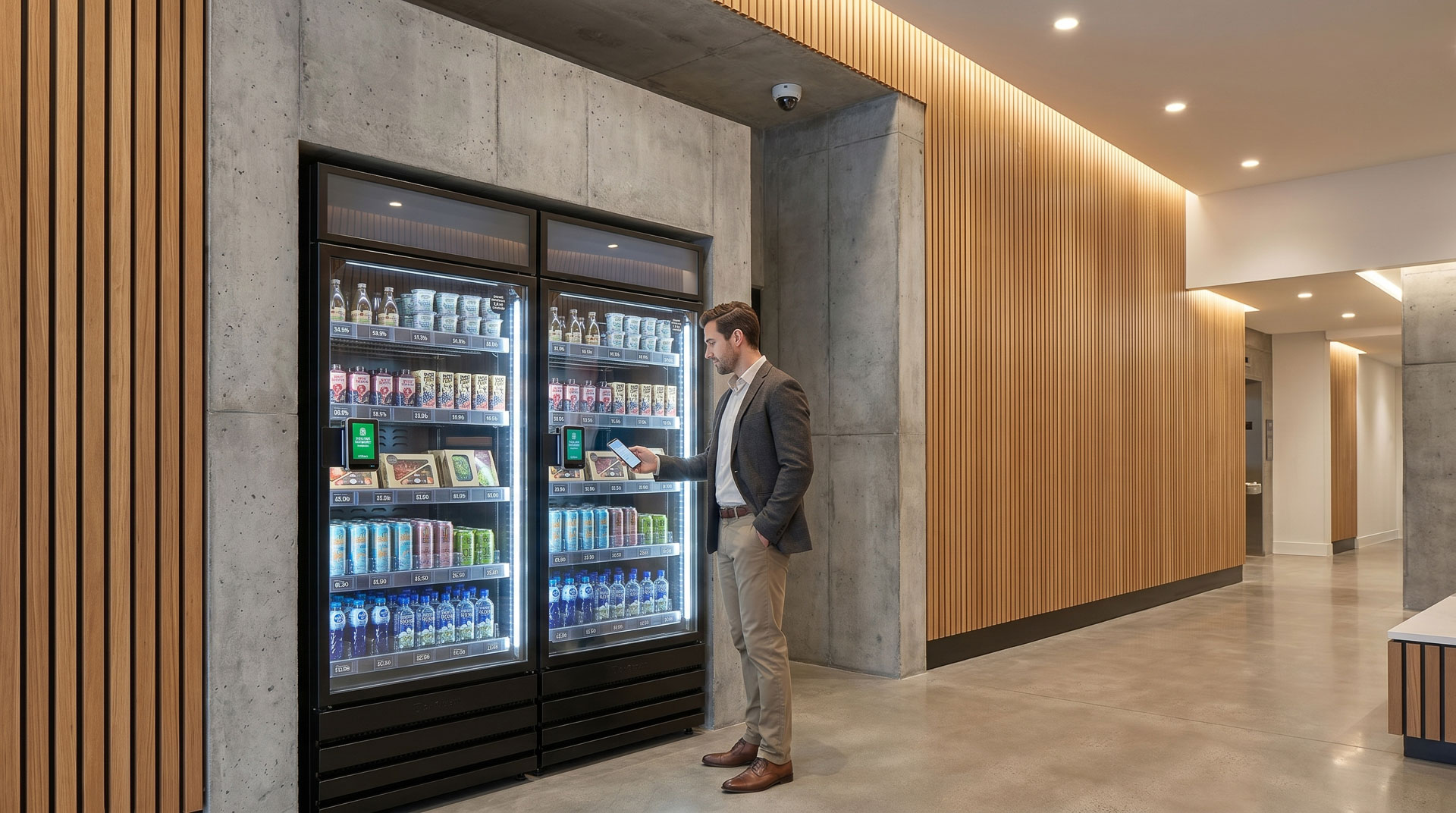
Well-lit, automated amenities can support a property’s security posture by making common-area use more visible, reducing cash handling, and giving residents or employees access to useful products without requiring staff to operate a store. They do not replace access control, cameras, patrols, lighting plans, or property policies, but they can fit into a safer, more orderly common-area strategy.
For property and facility teams, the practical question is how to add convenience without creating new blind spots, cash risks, or staff workload.
Quick answer
Automated amenities such as cashless smart vending can enhance security when they are placed in visible, well-lit areas, use controlled access, avoid cash collection, and are supported by a provider that handles stocking, maintenance, and payment issues. The amenity should work with the property’s existing security practices rather than trying to replace them.
The best setup starts with location. A useful automated amenity should be easy to find, easy to use, easy to service, and aligned with resident or employee traffic patterns.
Why lighting matters
Lighting affects how people experience common areas. A vending unit in a dark corner or hidden hallway is less inviting and harder to monitor. A unit in a visible, well-lit location feels more intentional and is easier for residents, employees, and staff to notice.
Good lighting supports:
- clearer visibility around the amenity
- easier product browsing
- better camera views where cameras are already used
- fewer hidden corners around the unit
- a more polished resident or employee experience
Lighting alone does not guarantee security. It is one part of a broader site plan that may include access control, camera placement, staffing policies, maintenance, and regular property walks.
Why automation changes the risk profile
Traditional vending often includes cash acceptance, mechanical jams, and service calls tied to bills and coins. Automated smart vending can shift the experience toward cashless, controlled-access use.
That matters because cashless operation removes onsite cash from the machine. Controlled-access cabinets keep products secured until payment is authorized. Remote monitoring can also help the operator see inventory and service issues sooner.
These are practical improvements, not absolute guarantees. A property still needs appropriate placement, lighting, building access, and service response.
What a secure amenity placement looks like
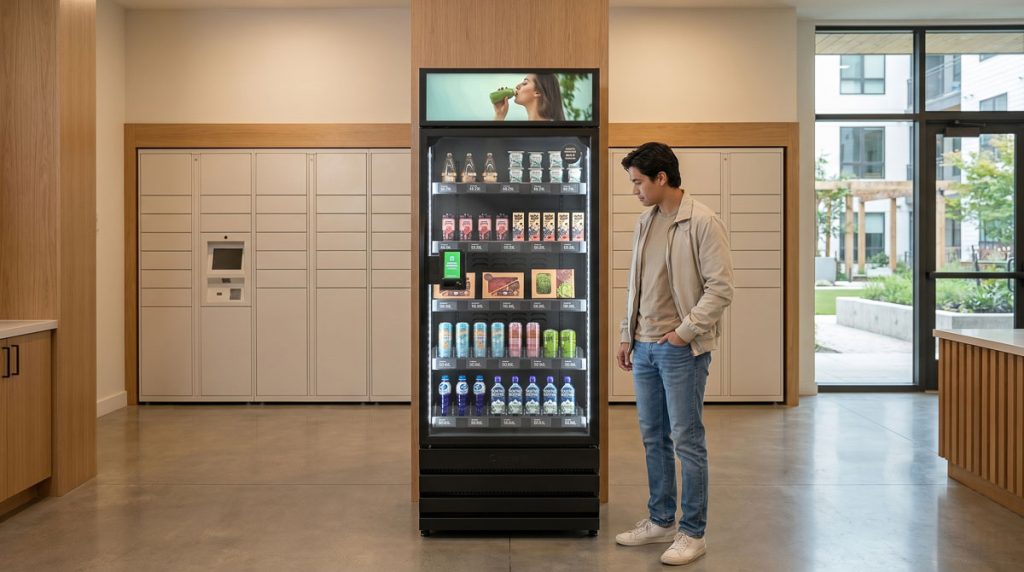
The best location is visible, convenient, and easy to service. It should not block exits, narrow hallways, mailroom traffic, package pickup, or emergency routes.
Good placements often include:
- lobby-adjacent common areas
- resident lounges
- mail or package areas with enough clearance
- fitness center entrances
- office break areas
- student housing study lounges
- staff-only back-of-house areas
Poor placements include hidden alcoves, dark corridors, outdoor areas not approved for the equipment, cramped utility spaces, or locations that make users feel isolated.
|
Location |
Why It Can Work |
What To Check |
|---|---|---|
|
Lobby-adjacent area |
Visible and easy to find |
Do not crowd entry flow or seating |
|
Mail or package area |
Residents already visit it often |
Keep package traffic and service clearance open |
|
Fitness center entrance |
Matches hydration and snack needs |
Confirm access hours and product fit |
|
Office break area |
Supports employee routines |
Confirm cleaning and traffic expectations |
|
Student housing lounge |
Useful for late-night access |
Lighting, camera views, and durability matter |
|
Staff-only back-of-house area |
Supports shift workers |
Access and restocking routes must be clear |
Controlled access versus open access
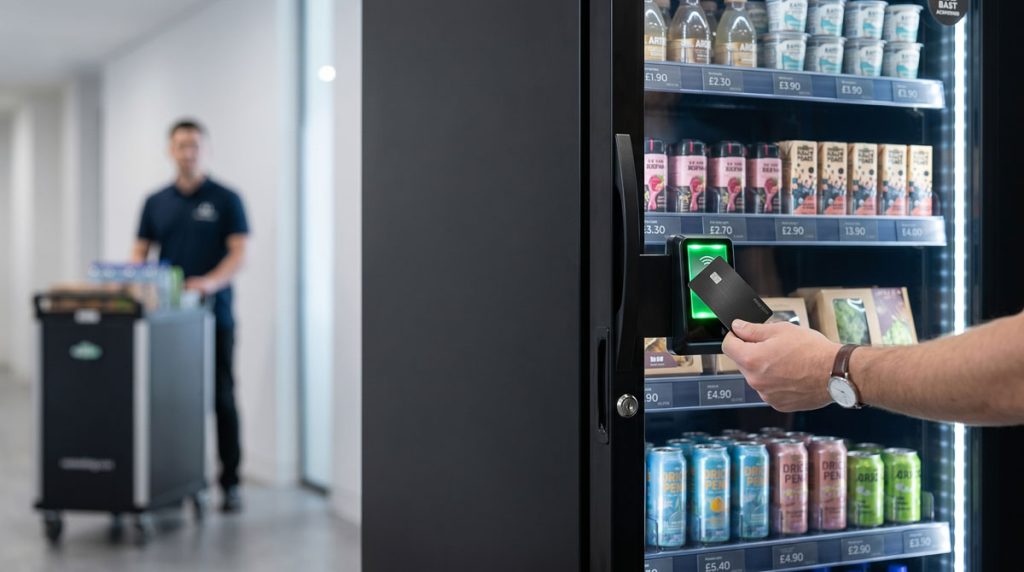
Open retail can work in the right environment, but it creates different risks. Products are accessible before payment, and the area may require more monitoring. Automated smart vending keeps products inside the unit until a valid payment method is used.
This can make smart vending a better fit for multifamily lobbies, mixed-use buildings, student housing common areas, and smaller workplaces where open shelves would be harder to supervise.
The decision is not only about theft. It is also about cleanliness, accountability, product presentation, and the amount of attention the amenity requires from staff.
Cashless payment reduces cash-related issues
Cashless smart vending removes the need for bill validators, coin mechanisms, and cash collection. That can reduce common problems tied to jams, change, and onsite cash handling.
For residents and employees, cashless payment is also faster and more familiar. For the property team, the important point is that the provider should handle payment support, refunds, and transaction questions.
If the onsite team is pulled into payment troubleshooting, the amenity is not as hands-off as it should be.
Security is also a service issue
An automated amenity can still create problems if it is poorly serviced. Empty shelves, product spills, broken doors, failed payments, and slow support all weaken the experience.
Property teams should evaluate the provider’s service model:
- Who monitors inventory?
- Who restocks the unit?
- Who responds to service issues?
- How are payment problems handled?
- How quickly can the provider resolve a visible problem?
- Who keeps the unit presentable?
- What does onsite staff have to do?
In AI Vending’s full-service model, the property provides space and power while the operator stocks, monitors, maintains, and supports the amenity. That keeps service accountability with the provider instead of the onsite team.
What to ask before installation
Before approving an automated amenity, ask:
- Is the location visible and well-lit?
- Does the placement support existing camera or access-control plans?
- Does the unit operate cashless?
- Are products secured before payment?
- What power, connectivity, airflow, and service clearance are needed?
- Who handles restocking and service?
- Who receives support calls?
- What happens if the unit is damaged or offline?
- Can the provider adjust products based on usage?
- Does the amenity fit the look of the property?
These questions help the property avoid a common mistake: adding convenience while creating a new operational blind spot.
When automated amenities may not help
Automated amenities may not be the right answer if the only available location is hidden, poorly lit, hard to service, or disconnected from normal traffic. They may also be a poor fit if the property expects the equipment to solve underlying access-control, staffing, or maintenance issues.
If a common area already feels uncomfortable, the property should address lighting, visibility, access, and maintenance before adding an amenity. A vending unit should reinforce a good plan, not cover for a weak one.
Build convenience into the security plan
The strongest amenity decisions connect convenience with operations. A well-lit, cashless, controlled-access smart vending unit can give residents or employees useful 24/7 access while reducing cash handling and keeping products secured.
The important word is “support.” Automated amenities support a property’s security and convenience strategy when they are placed well, maintained consistently, and operated by a provider that takes responsibility for the details.
AI Vending can help property and facility teams evaluate smart vending placement, visibility, cashless access, and service expectations before adding an automated amenity.