
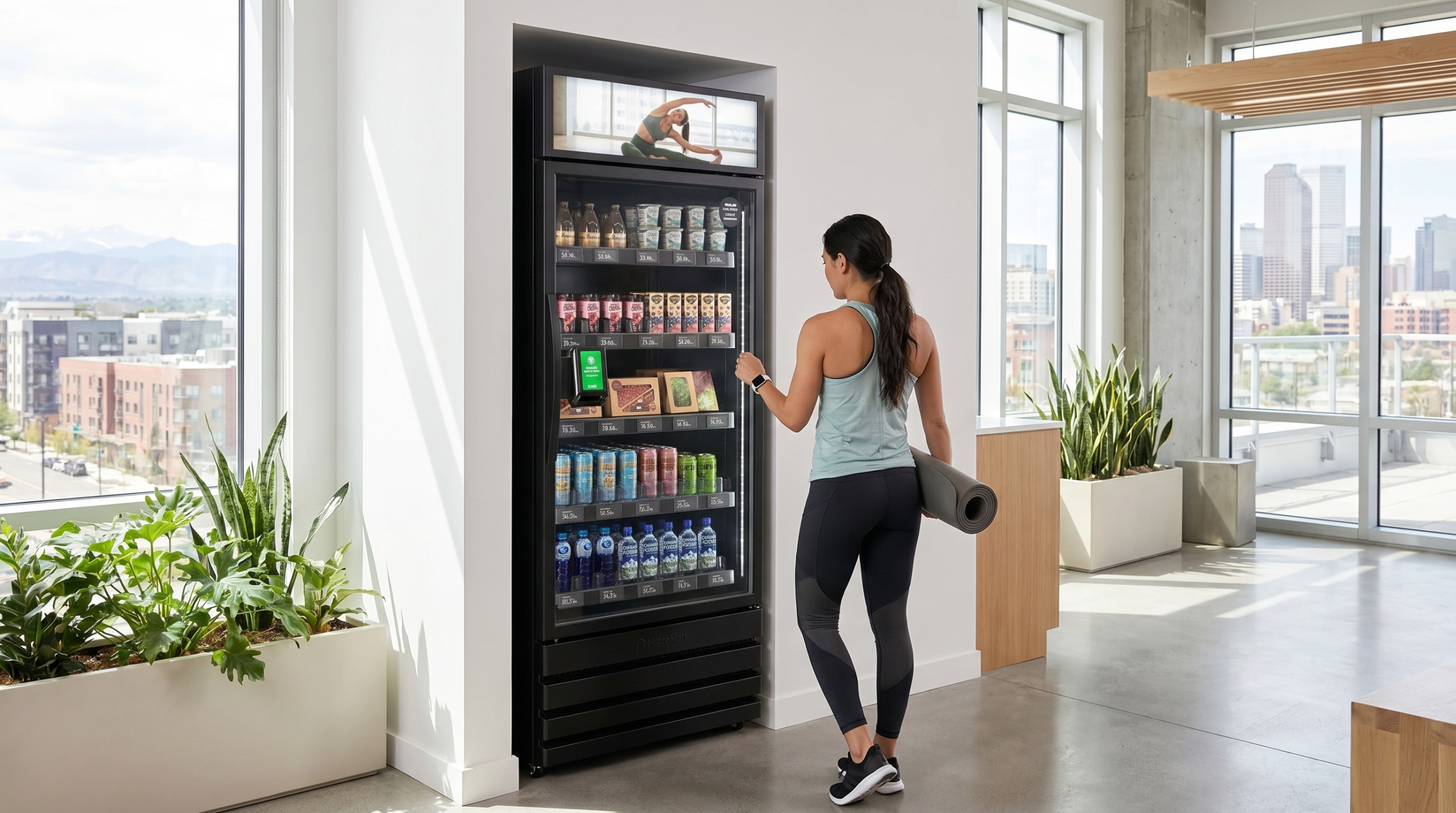
Wellness smart vending gives Denver properties a practical way to offer healthier snacks, drinks, quick meals, and essentials without turning the property team into inventory managers. The value is not just putting a few better-for-you items in a machine. It is a managed, cashless, data-informed amenity that fits how residents, tenants, and employees actually make daily convenience decisions.
For property managers, the buyer question is simple: can this amenity give people better onsite options while staying off the staff workload? A strong setup should pair relevant product selection with reliable stocking, simple payment, clear support, and ongoing product adjustments.
Quick answer
Wellness smart vending is a modern vending or smart store setup focused on better-for-you products, cashless access, and vendor-managed operations. For Denver properties, it can support residents and tenants with more useful onsite options while the provider handles stocking, maintenance, payment support, and product updates.
The right fit is usually a fully managed model. The property provides an appropriate indoor location and power. The operator handles the equipment, product curation, remote inventory monitoring, restocking, customer support, and service.
What is wellness smart vending?
Wellness smart vending is a vending or smart store amenity built around healthier, more intentional product selection. Instead of relying only on candy, soda, and standard packaged snacks, the product mix can include higher-protein foods, functional beverages, better hydration options, cleaner ingredient snacks, and practical everyday items.
The smart part matters too. A useful system can track what people actually buy, which helps the operator adjust the product mix over time. That keeps the selection from becoming stale or mismatched.
For the customer, the experience should feel simple. They can buy something quickly with a card or mobile wallet, often from a glass-front cabinet or modern vending unit, without leaving the property. For the onsite team, the amenity should be simple after installation because the operator owns the day-to-day work.
Why better options matter in Denver properties
Many Denver residents and tenants build wellness into daily life through fitness, outdoor activity, nutrition, work routines, and convenience. A property does not need to make broad lifestyle claims to recognize a practical reality: people often want quick options that fit their routines better than traditional vending.
That need shows up in small moments:
- A resident finishes a workout and wants protein or hydration.
- Someone working from home needs a snack that is not just sugar.
- An office tenant wants a quick drink between meetings.
- A resident gets home late and wants a better option than delivery.
- Someone with dietary preferences wants a clearly suitable choice.
Wellness smart vending helps fill those gaps. It does not replace grocery stores, restaurants, or meal prep. It gives residents and tenants a better immediate option inside the building.
Why traditional vending falls short
Traditional vending was built for convenience, but it often misses the way people choose food now. Many older machines still rely on products that are shelf-stable, cheap to stock, and familiar, but not necessarily aligned with resident or tenant expectations.
That creates three problems for properties:
- People stop using the amenity because the options do not fit.
- The machine starts to feel outdated or ignored.
- Property staff still hear complaints when products are empty, payments fail, or the selection feels poor.
The issue is not that every item must be a health product. Residents still want variety. The issue is that the product mix should feel intentional and useful, not random.
What better-for-you product curation looks like
Better-for-you vending should be specific. A vague promise of healthy snacks is not enough. Property teams should understand how the provider thinks about product selection and how those decisions will change after launch.
| Product Category | Common Use Case | Operating Caution |
|---|---|---|
| Protein snacks | Post-workout, workday hunger, between-meal convenience | Do not overstate nutrition benefits |
| Hydration and functional beverages | Fitness areas, offices, late-night convenience | Rely on product labels for claims |
| Fresh or refrigerated items | Light meals, yogurt-style products, salads, prepared foods | Requires stronger rotation and temperature planning |
| Dietary-preference options | Vegan, gluten-free, dairy-free, lower-sugar preferences | Label from manufacturer documentation, not assumptions |
| Local or lifestyle brands | Community fit and product variety | Keep only what demand supports |
Protein and more filling snacks
Protein-focused options can help residents or tenants who want something more filling after a workout, during a workday, or between meals. Examples may include protein bars, nuts, jerky, trail mixes, yogurt-style products where refrigeration is available, or shelf-stable meal alternatives.
The goal is not to make medical or nutrition claims. The goal is to offer options that are more useful than a sugar-heavy snack when someone needs something quick.
Hydration and functional beverages
Functional beverages may include sparkling water, electrolyte drinks, cold coffee, lower-sugar drinks, or other beverages selected for common use cases such as hydration, energy, or recovery.
Product claims should be handled carefully. If a beverage claims a specific functional benefit, the published copy and onsite merchandising should rely on the manufacturer’s labeling and avoid unsupported health promises.
Dietary preferences
A wellness vending program can include options that support common preferences such as vegan, gluten-free, dairy-free, or lower-sugar choices. These options should be clearly labeled and based on product packaging, not assumptions.
This matters because dietary fit is practical. A resident does not need every item to match their preference. They need enough clear choices to trust the amenity when they are in a hurry.
Local and lifestyle fit
Where possible, product selection can reflect local preferences or Colorado-based brands. This can make the amenity feel more connected to the property and surrounding community, as long as the products also fit demand, shelf life, and operational requirements.
Local products should still earn their spot. If an item does not sell, the operator should be willing to replace it with something residents actually use.
How the fully managed model works
The strongest wellness smart vending setups are managed by the provider from installation onward. That matters because product quality and availability only stay strong if someone is actively monitoring the system.
Before installation, the provider should:
- visit the property or review the space
- recommend placement based on traffic and visibility
- confirm power, airflow, and connectivity needs
- build an initial product mix based on property type
- explain payment, refund, and service processes
After installation, the provider should:
- track inventory remotely
- restock based on actual purchases
- replace slow-moving products
- handle payment issues
- maintain the unit
- review product performance over time
- keep the property team out of daily vending tasks
For property managers, this is the key difference between a wellness amenity and another operational responsibility.
Where wellness smart vending fits best
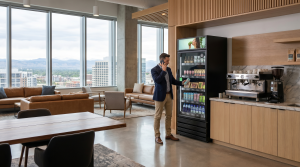
Wellness smart vending can work in several property types, but placement should match the use case.
| Property Area | Best Product Fit | Placement Note |
|---|---|---|
| Fitness center or gym entrance | Protein snacks, hydration, recovery drinks | Works best where people naturally exit workouts |
| Lobby or mailroom | Drinks, snacks, grab-and-go essentials | Needs enough room to avoid crowding resident flow |
| Resident lounge | Coffee, snacks, light meals | Useful when residents already work or gather there |
| Office common area | Workday snacks, beverages, meal replacements | Product mix should match workday demand |
| Student housing common area | Late-night snacks, caffeine, quick meals, essentials | Restocking and durability matter more than novelty |
The right location is visible, convenient, and easy to service. If residents or tenants have to search for the amenity, it is less likely to become part of their routine.
What to ask a wellness smart vending provider
Property teams should evaluate the provider as much as the equipment. The cabinet may create the first impression, but the operating model determines whether the amenity stays useful.
Before approving a setup, ask:
- What product categories do you recommend for this specific property and why?
- Can the assortment include vegan, gluten-free, dairy-free, or lower-sugar options when demand supports them?
- How are dietary and product claims verified?
- Who handles restocking, payment issues, refunds, and service requests?
- How often do you review product performance?
- What happens when products are slow-moving or repeatedly out of stock?
- Can the setup support refrigerated or fresh items, and what does that require?
- What power, airflow, connectivity, and service access do you need?
- How will the product mix change after the first 30 to 60 days?
- What does the property team have to do after installation?
The answers should be specific. A provider that cannot explain product standards, service responsibilities, and post-launch adjustments may leave the property with a machine instead of a managed amenity.
When wellness smart vending may not be the right fit
Some properties should solve a placement or operations problem before installing wellness smart vending. The amenity may underperform if the only available location is hidden, outdoors, poorly lit, hard to service, or disconnected from normal resident or tenant traffic.
It may also be the wrong setup if the property expects fresh meals but cannot support refrigerated equipment, airflow, power, service access, or frequent rotation. Fresh food and refrigerated products require more operational discipline than shelf-stable snacks.
The product promise matters too. If the property wants strong nutrition or health claims that the provider cannot verify, the safer move is to keep the copy practical: better options, clear labels, and convenient access. Wellness smart vending should not be used to imply medical benefits or guaranteed health outcomes.
Finally, be cautious if the provider expects onsite staff to manage inventory, handle refunds, or decide product replacements. That defeats one of the main reasons to choose a managed smart vending model.
Common mistakes to avoid
The first mistake is treating wellness as a label instead of a product strategy. A few granola bars in an otherwise standard vending machine will not feel like a meaningful upgrade.
The second mistake is ignoring behavior after launch. Product curation should change based on what people actually buy. If the provider does not review inventory data, the selection may become stale.
The third mistake is making claims that are too strong. Avoid saying products are medically beneficial, guaranteed to improve health, or approved for specific conditions unless those claims are supported by authoritative evidence and appropriate review.
The fourth mistake is putting the work back on the property team. If staff members have to monitor products, choose replacements, handle refunds, or chase service requests, the amenity is not really hands-off.
Frequently asked questions
What makes wellness smart vending different from healthy vending?
Healthy vending often refers mainly to product selection. Wellness smart vending includes product selection plus cashless access, inventory tracking, managed restocking, service support, and ongoing product adjustments based on actual use.
Can wellness smart vending include vegan or gluten-free products?
Yes, if those products are part of the provider’s available inventory and are clearly labeled by the manufacturer. Property teams should avoid making assumptions and should rely on product packaging or provider documentation for dietary claims.
Are wellness vending products more expensive?
Some better-for-you products may cost more than standard vending snacks because of ingredients, brand positioning, or packaging. The right comparison is usually convenience and quality, not the lowest possible snack price.
Does the property team choose every product?
Usually no. The property can share preferences, resident profile, and any restrictions, but the provider should manage the product mix. Strong systems adjust based on what residents actually buy.
Is wellness smart vending only for luxury apartments?
No. It can work in luxury apartments, Class B and C properties, student housing, offices, and mixed-use buildings. The product mix and placement should be tailored to the audience and budget expectations.
Add a wellness smart store to your property
Wellness smart vending works when it gives residents and tenants better options without adding work for the property team. For Denver properties, that means a managed amenity with relevant products, cashless access, reliable stocking, and a product mix that improves over time.
Before adding a unit, confirm the provider’s product standards, service responsibilities, payment support, and placement recommendations. The right setup should be built around useful products, reliable service, clear support, and low staff lift.
AI Vending can help Denver property teams evaluate whether a wellness smart vending setup fits the building, audience, and service expectations before committing space to an amenity.
See how AI Vending approaches Denver submarkets.
If you are comparing smart stores, vending, or micro markets across Denver, the Denver location page gives the broader local view across hotels, apartments, offices, and workplace properties.