
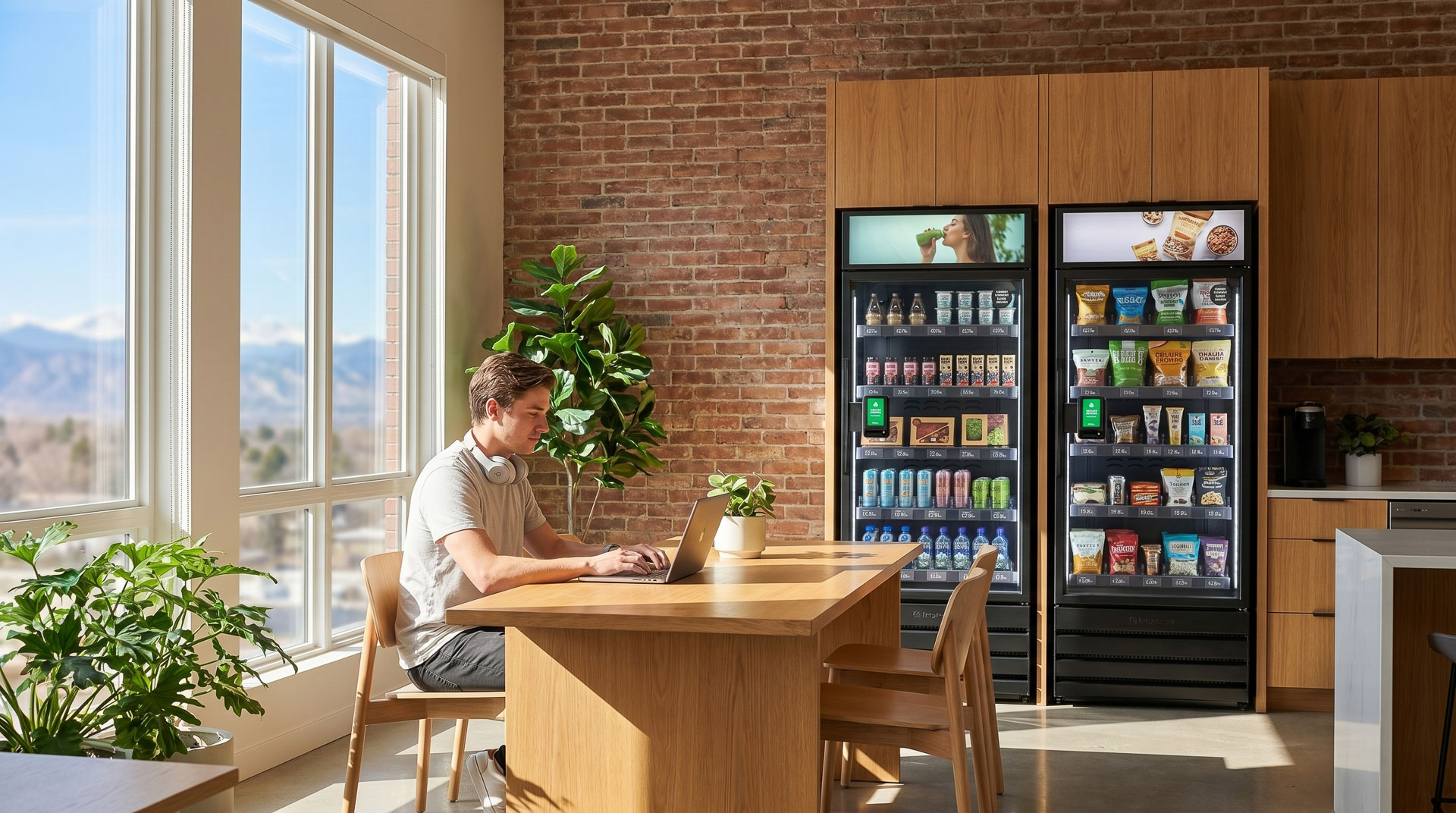
A work-from-home amenity supporting remote residents should make daily life easier inside the building, not just add another feature to the amenity list. For Denver apartment communities, a fully managed smart vending or smart store setup can support residents who work from home by giving them 24/7 access to drinks, snacks, quick meals, and essentials without asking the property team to run a market.
The best version is practical. It helps residents solve small daily needs between meetings, after workouts, late at night, or during long work blocks while the provider handles stocking, service, payment support, and product updates.
Quick answer
A work-from-home vending amenity is an onsite convenience point designed around remote and hybrid resident routines. It can support coffee breaks, midday snacks, quick meals, hydration, personal care basics, and late-night needs through a cashless, provider-managed smart store.
For property teams, the value is not only convenience. It is a resident experience upgrade that can fit into existing common areas without creating a new staff job.
Why remote residents use amenities differently
Remote and hybrid residents spend more weekday hours inside the property. That changes how they use the building. A resident may start the day in a unit, take calls from a coworking lounge, use the fitness center at lunch, pick up packages in the afternoon, and still need something quick before an evening meeting.
That routine creates small convenience gaps:
- coffee or cold drinks between calls
- snacks that do not require leaving the building
- quick meals when delivery is too slow or expensive
- hydration after the gym
- everyday items like gum, pain relief, or personal care basics
- late-night options when nearby retail is closed
A property does not need to promise a full workplace experience to support these needs. It can provide a simple, useful, always-available convenience point.
What a strong work-from-home amenity includes
The best setup depends on the building, but the core idea is consistent: place useful products where remote residents already move.
| Resident need | Product categories | Placement fit |
|---|---|---|
| Morning start | cold coffee, tea, water, light snacks | lobby, mailroom, coworking area |
| Midday focus | protein snacks, sparkling water, quick meals | coworking lounge or clubroom |
| Fitness break | hydration, protein items, better-for-you snacks | fitness-adjacent area |
| Late work block | meals, drinks, pantry items | lobby or secure common area |
| Small emergency | personal care and practical essentials | mailroom, lobby, or resident lounge |
The right mix should change after launch. Remote residents may buy differently than commuters, students, or visitors. A managed provider should use real purchasing behavior to refine the assortment.
Why traditional vending often misses this use case
Traditional vending can provide snacks and drinks, but it often feels disconnected from how residents live in the building. Product choices may be static, payment options may feel dated, and service issues can turn into complaints for the onsite team.
Remote residents notice those gaps because they interact with the property throughout the day. If the amenity is empty, hidden, unreliable, or stocked with products that do not fit their routines, it stops feeling like a benefit.
Smart vending works better when it is treated as a managed resident amenity. The operator should monitor inventory, restock around demand, handle support, and adjust products instead of leaving the property team to troubleshoot.
Where to place the amenity
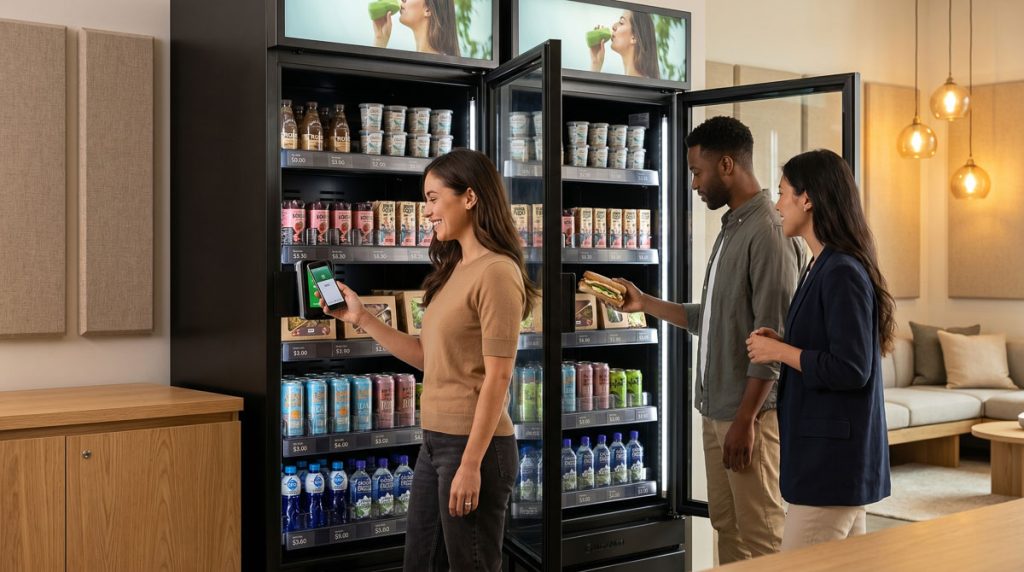
Placement should follow resident behavior. A cabinet near a coworking lounge can support the workday. A lobby or mailroom placement can serve package pickup, commuting, and late-night traffic. A fitness-adjacent placement can support hydration and post-workout snacks.
Common fits include:
- coworking lounges
- mailrooms and package areas
- resident clubrooms
- lobbies
- fitness-adjacent spaces
- laundry rooms
- high-traffic corridors
The best location is visible, secure, easy to reach, and close to a real resident routine. A hidden machine in a low-traffic hallway is unlikely to become a meaningful work-from-home amenity.
What the downtown Denver case study suggests
AI Vending’s downtown Denver case study, published March 23, 2026, reported 60.7% resident adoption, 30.4% monthly usage, and 25.9% of transactions between 10 PM and 5 AM at an Avenue5 Residential-managed property. The same case study reported 31.7% stronger demand for full meal options than AI Vending’s per-location average.
Those numbers should not be treated as a guarantee for every building. They do show why property teams should think beyond candy and soda. Residents use onsite retail at different hours, and meal demand can matter when the product mix fits the building.
For remote and hybrid residents, that lesson is useful: the amenity should support real daily patterns, not just the old break-room vending model.
How a fully managed model protects the property team
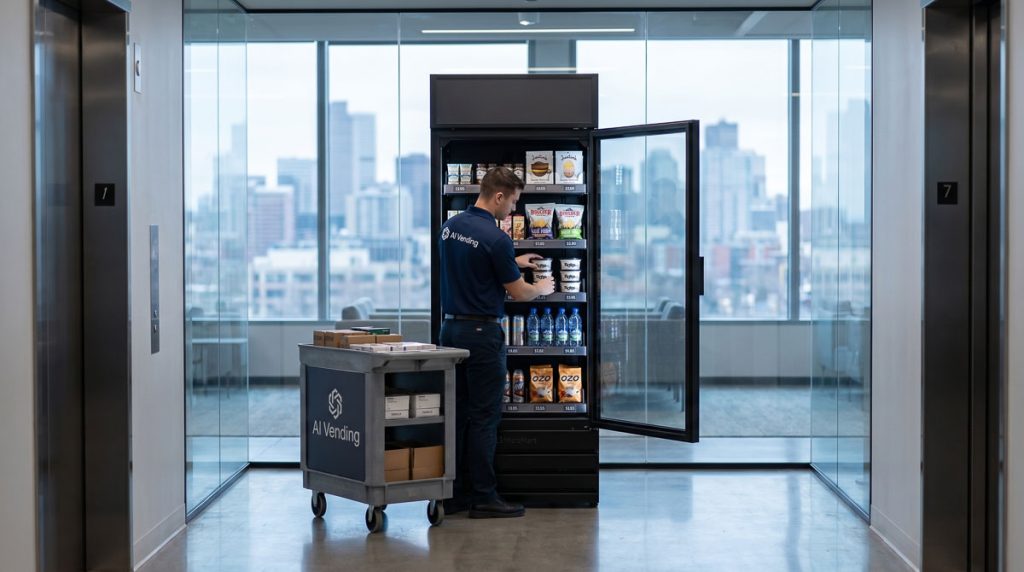
The biggest risk with any resident amenity is operational creep. A small convenience idea can become a staff burden if the property has to track inventory, handle payment issues, field product complaints, or coordinate service.
A strong work-from-home smart vending program should include:
- provider-managed installation
- remote inventory monitoring
- proactive restocking
- cashless payment handling
- customer support for transactions
- product mix reviews
- equipment maintenance
The property should provide the approved location, power, and access. The operator should handle the rest.
What to ask before installing
Property teams should ask providers direct questions:
- How do you choose products for remote and hybrid residents?
- Can the mix include drinks, meals, snacks, and essentials?
- How often do you review usage and change the assortment?
- Who handles refunds, payment support, and service calls?
- What location, power, and access requirements should we plan for?
- Can the amenity support late-night resident use without adding staff coverage?
- How do you keep the program useful without making it salesy or cluttered?
Good answers should be specific. The provider should be able to connect product mix, placement, and service model to resident behavior.
When it may not be the right fit
A smart vending amenity may not work well in a building with very low common-area traffic, limited indoor placement, unreliable power access, or a resident base that rarely uses shared spaces. It may also underperform if the product mix is too narrow or if the provider expects property staff to manage too much of the operation.
The decision should start with the resident routine. If people already pass through a visible common area during the day, a work-from-home convenience point has a stronger chance of being used.
How AI Vending supports remote-resident amenities
AI Vending installs and manages smart store amenities for Colorado properties. For remote-resident use cases, that means the cabinet, product mix, monitoring, restocking, payment support, and service stay with the operator.
For a Denver apartment community, the next step is a site survey focused on resident movement, coworking areas, mailroom traffic, fitness use, power access, and product needs. The goal is a useful convenience amenity that supports work-from-home routines without adding work for the onsite team.
FAQs
Is smart vending really a work-from-home amenity?
Yes, when it is placed and stocked around remote resident routines. It should support daytime work blocks, coworking areas, fitness breaks, meals, and after-hours needs.
Does the property have to buy inventory?
No. In a fully managed model, the provider stocks, monitors, services, and supports the amenity. The property should not be responsible for inventory or payment support.
What products matter most for remote residents?
Useful categories include coffee drinks, water, sparkling beverages, protein snacks, quick meals, better-for-you snacks, and practical essentials. The best mix should change based on usage.
What should a property do next?
Start by identifying where remote residents already move during the day. Then talk to AI Vending about whether a fully managed smart store can support those routines in the building.