
Centennial smart stores and micro markets for high-expectation properties.
AI Vending serves Centennial hotels, apartments, and office properties with cashless smart stores and micro markets that stay fully managed.
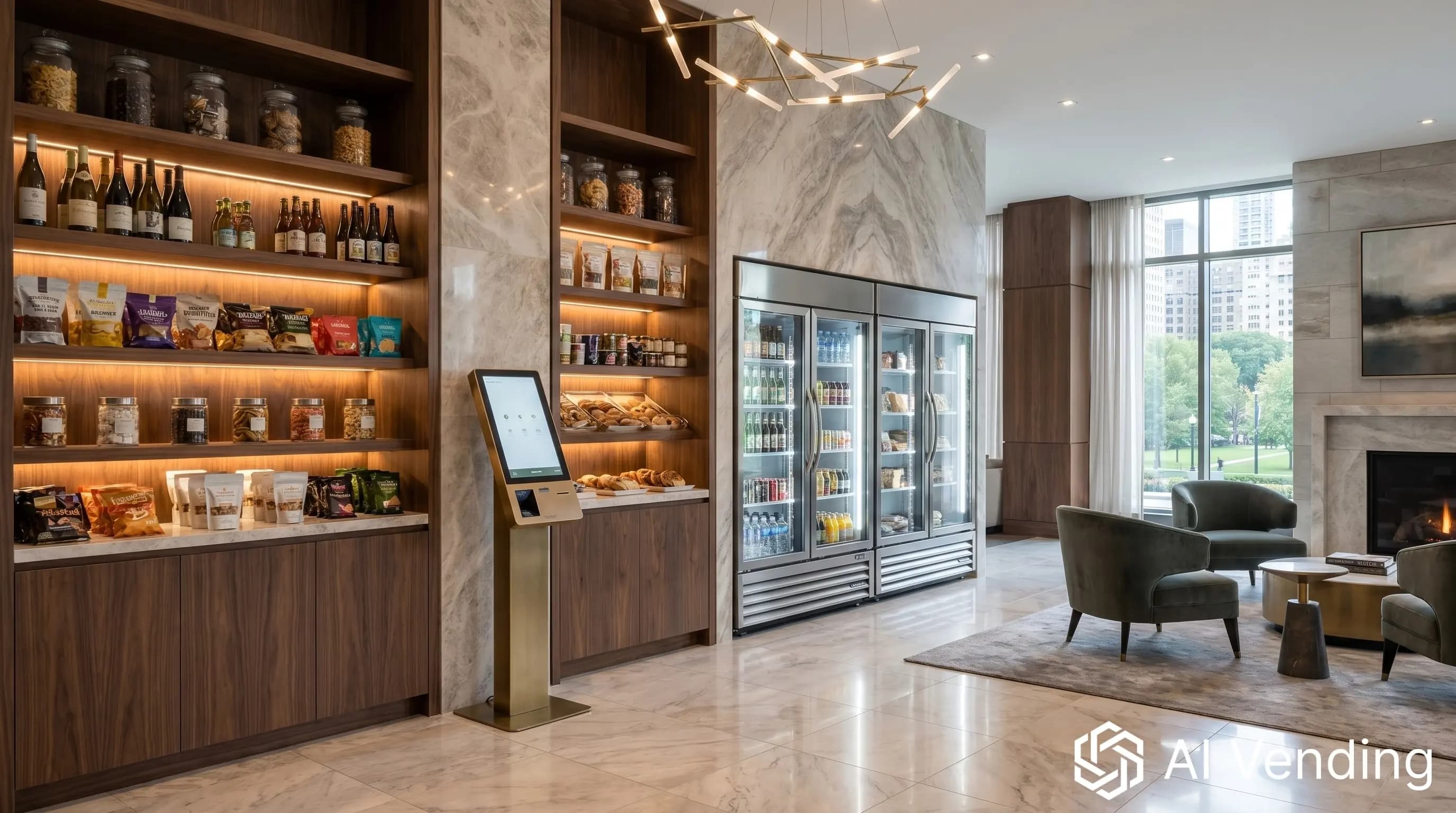
What kinds of Centennial properties usually get the most value from this amenity?
Centennial is a strong fit for properties that want a more polished convenience offer but do not want to run their own breakroom or retail operation. Hotels, office buildings, and larger residential communities all benefit when the amenity is selected around traffic, space, and desired presentation.
- Business-travel hotels, office properties, and high-expectation residential communities usually care about presentation as much as convenience.
- South metro properties often want a premium amenity without creating another operational system for onsite teams.
- The recommendation usually turns on whether the building needs a compact daily-use footprint or a stronger hospitality-facing setup.
What footprint usually makes the most sense in Centennial?
The question in Centennial is usually whether the building should use a compact smart-store setup, a larger smart-store setup, or a fuller micro market.
- Centennial smart stores are AI Vending's next-generation vending-machine format, with compact cabinet setups and larger multi-cabinet layouts available depending on the property.
- A compact smart-store setup works well for targeted convenience in tighter business, residential, or hotel footprints without overbuilding the amenity.
- Smart stores are a good fit for Centennial properties that want a stronger hospitality or workplace experience in a managed format.
- AI Vending handles stocking, telemetry, maintenance, and product mix so the program stays hands-off for the onsite team in Centennial.
- Micro markets give Centennial hotels, apartments, and workplaces a broader self-serve retail zone with coolers, shelving, and a more open shopping experience.
- Micro markets serve larger Centennial footprints where users want more choice and the property wants a more complete self-serve offer.
- The format works best when a property wants a stronger food-and-beverage offer while still keeping operations outsourced.
How do hotels in Centennial usually choose the right setup?
Centennial hotels often choose a compact smart-store setup when they need a straightforward footprint, larger smart-store layouts when they want a more elevated guest-facing option, and micro markets when the building has enough common-area space to support a broader assortment and longer dwell times.
Hotels in Centennial can use compact and larger smart-store setups, or micro markets to give guests better access to drinks, snacks, and essentials without expanding a staffed food-service operation. That is especially useful for business-travel hotels where guest demand starts early, runs late, and rewards speed over formality.
- Business-travel demand in Centennial starts early, runs late, and rewards speed over a formal food-service model.
- Compact smart-store setups are the right first step in tighter footprints, while larger smart-store layouts fit stronger guest-facing spaces.
- Service quality matters because the amenity sits inside properties that care about polish and consistency.
After installation in Centennial, the onsite team should not be adjusting product mix or chasing service tickets. AI Vending manages stocking, monitoring, and maintenance so the amenity stays guest-ready and workplace-ready without extra local coordination.
Centennial properties often serve a mix of business travel, office demand, and high-expectation residential users. In that environment, onsite retail needs to feel intentional and dependable, whether the goal is a polished hotel lobby program or a hands-off convenience amenity for a larger campus.
The goal is not to force one footprint everywhere. It is to plan around the actual submarket, the hours when people need the amenity, and how much visible common-area space the property can realistically spare without compromising the rest of the building.
Useful reading for Centennial property teams
Use these resources to compare footprints, understand the operating model, and see how AI Vending frames real deployment decisions in and around Centennial.
What commercial properties need from a full-service vending and grab-and-go program.
How always-open retail works across managed buildings that need convenience without staffing overhead.
Why cashless equipment, remote monitoring, and contactless checkout matter for modern properties.
Questions we hear when Centennial properties start comparing formats
These are usually the practical questions that come up once a team starts weighing space, demand, and rollout effort.
Centennial is a strong fit for properties that want a more polished convenience offer but do not want to run their own breakroom or retail operation. Hotels, office buildings, and larger residential communities all benefit when the amenity is selected around traffic, space, and desired presentation.
Centennial hotels often choose a compact smart-store setup when they need a straightforward footprint, larger smart-store layouts when they want a more elevated guest-facing option, and micro markets when the building has enough common-area space to support a broader assortment and longer dwell times.
After installation in Centennial, the onsite team should not be adjusting product mix or chasing service tickets. AI Vending manages stocking, monitoring, and maintenance so the amenity stays guest-ready and workplace-ready without extra local coordination.
Want to plan a Centennial rollout?
We will look at the footprint, the audience, and whether a compact smart-store setup, a larger smart-store setup, or a micro market makes the most sense for the property. The contact flow stays simple: tell us about the building and we will map the right setup.