
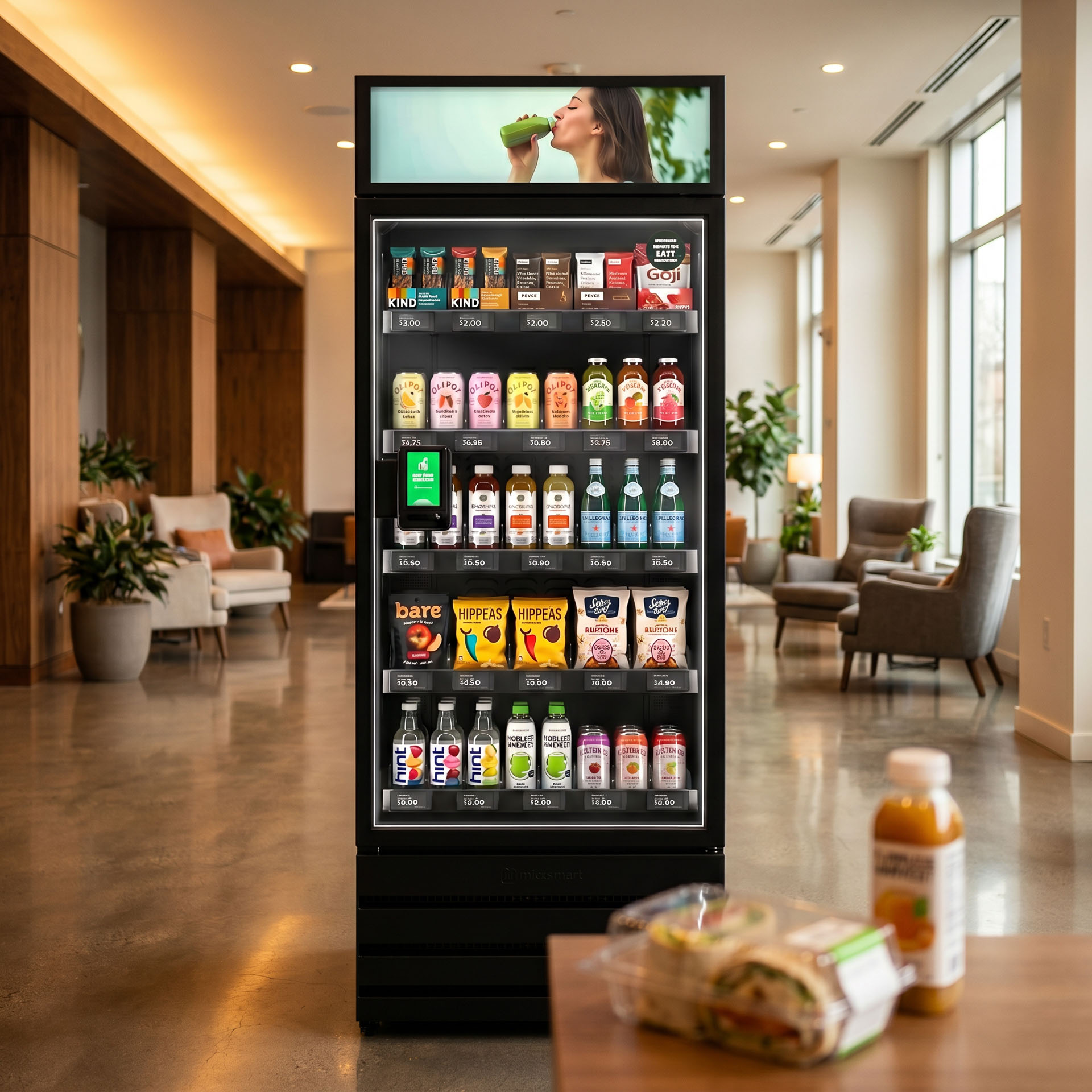
AI inventory management can help fight food waste in smart vending by matching products more closely to real demand, flagging slow-moving items, improving restock timing, and helping operators rotate inventory before products expire. The goal is not to make a vending program magically waste-free. The goal is to make better stocking decisions with better information.
For property and facility teams, the practical question is whether the vending provider can use inventory data to reduce stale products, avoid overstocking, and keep the amenity useful without asking onsite staff to manage the cabinet.
Quick answer
AI inventory management supports waste reduction by tracking what sells, what sits, what needs restocking, and what should change by location. In a managed smart vending program, that information can guide product mix, service timing, fresh-food rotation, and cabinet sizing.
The biggest waste problem in vending is not usually one dramatic mistake. It is a series of small mismatches: wrong products, wrong quantities, wrong restock timing, and too little follow-up after launch.
Where food waste happens in vending
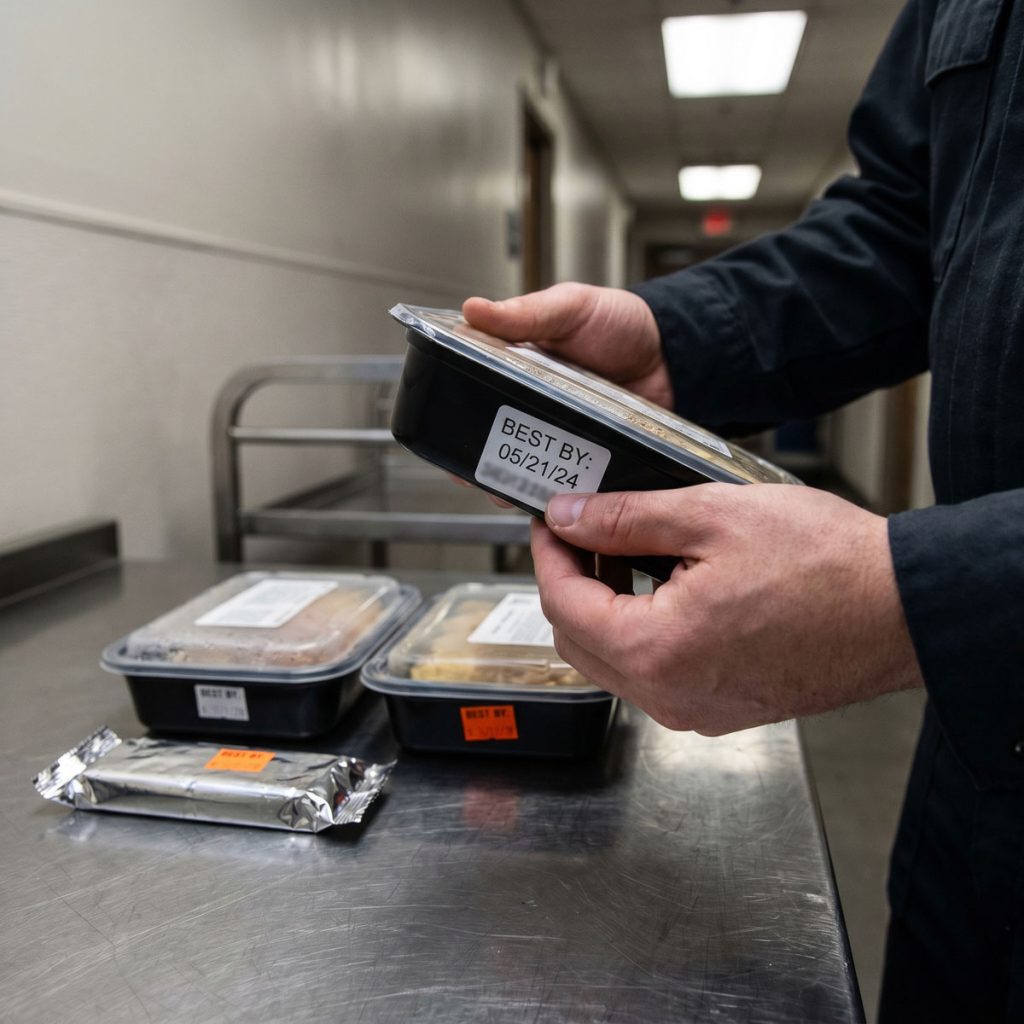
Food waste in vending and onsite retail usually comes from operational mismatch. A product may be perfectly good in one building and a poor fit in another.
Common causes include:
- stocking the same products in every location
- overestimating demand for fresh meals
- underestimating late-night or weekend use
- letting slow-moving items stay too long
- using a restock schedule that does not match real sales
- choosing a cabinet that is too large for the location
- adding local or premium products without confirming demand
- failing to rotate refrigerated products carefully
Waste is not only a sustainability issue. It also affects resident and employee trust. If a cabinet feels stale, empty, or poorly matched to the audience, usage can fall.
What AI inventory management actually means
In a smart vending context, AI inventory management should mean practical product intelligence, not vague technology language.
Useful capabilities may include:
- product-level sales visibility
- remote inventory monitoring
- demand patterns by location
- alerts when key products are low
- slow-seller identification
- restock planning based on actual use
- support for product mix changes
- better matching of refrigerated, frozen, and pantry products
The provider still needs human judgment. The data can show what is happening, but the operator has to decide what to change, when to restock, and how to protect product quality.
Demand-based stocking is the first lever
The simplest way to reduce avoidable waste is to stock what people actually buy.
That sounds obvious, but many vending programs still start from a generic list. The same drinks, snacks, and meals may be placed in an apartment lobby, office break area, warehouse, and fitness-adjacent space even though those audiences behave differently.
Demand-based stocking asks:
- What sells quickly?
- What sells slowly?
- What never gets touched?
- What sells at certain times of day?
- Are people buying meals, snacks, drinks, or essentials?
- Do products change during move-in, events, or seasonal shifts?
When the operator answers those questions regularly, the cabinet can become more useful and less wasteful.
Product rotation matters for fresh food
Fresh meals and refrigerated products can make a smart vending amenity more useful, but they require discipline. A provider should not add fresh food just because it looks good in a product photo.
Fresh-food decisions should account for:
- expected demand
- shelf life
- refrigeration performance
- restock frequency
- product rotation process
- visibility of expiration dates
- service access
- local demand for meals versus snacks
If a location does not have enough demand for fresh food, a stronger plan may use more shelf-stable meals, frozen options where supported, or a smaller refrigerated selection.
AI helps by finding patterns faster

Inventory data can reveal patterns that manual checks miss. A cabinet may show strong demand for full meals after 8 PM, low demand for a certain beverage, or different weekday and weekend behavior.
Those patterns can help the operator:
- reduce quantities of slow-moving products
- increase space for products that sell consistently
- test a small number of new items before expanding
- restock fresh items closer to when demand happens
- avoid filling the cabinet for appearance rather than use
- identify locations that need a smaller setup
The value is in acting on the data. A dashboard does not reduce waste unless the provider changes the product plan.
Smart cabinets can reduce stockouts and overstock
Stockouts and overstock are two sides of the same problem. If popular items are empty, residents stop trusting the amenity. If unpopular items fill the shelves, products may expire or need to be removed.
Remote monitoring helps the provider see both issues. A better program should keep the cabinet stocked enough to feel useful without overfilling categories that do not move.
| Inventory Signal | What It May Mean | Better Response |
|---|---|---|
| Repeated stockouts | Product demand is stronger than expected | Increase quantity or restock frequency |
| Slow movement | Product does not fit the audience | Replace or reduce the item |
| Fresh item waste | Demand is lower than shelf life requires | Use smaller quantities or different formats |
| Late-night meal sales | Residents need after-hours food | Adjust restock timing and meal selection |
| Low category demand | Cabinet mix is too broad | Shift space to stronger categories |
Sustainability claims need discipline
Food waste is a serious topic, so claims should stay specific. A provider can say that AI inventory management may help reduce avoidable waste by improving product fit and restock decisions. It should not claim zero waste unless it can prove that outcome.
Property teams should ask what the provider actually tracks:
- expired products
- removed products
- slow movers
- stockouts
- category performance
- restock frequency
- product changes after launch
The answer should be operational, not just environmental language.
The property team should not manage waste
A smart vending program should not shift food-waste work to the property. Onsite staff should not be asked to check dates, remove products, track sales, or tell the provider what to stock every week.
The provider should own:
- product selection
- inventory monitoring
- restocking
- rotation
- product removal
- service timing
- payment support
- cabinet maintenance
That accountability matters because waste prevention depends on consistent follow-through.
How this applies in apartment and workplace settings
In apartment buildings, inventory management can support resident routines: breakfast, work-from-home meals, after-gym drinks, late-night snacks, and small essentials. The product mix should reflect how residents actually use the building.
In offices and facilities, demand may cluster around morning coffee, lunch gaps, long shifts, meetings, or visitor traffic. A workplace cabinet may need different items than a residential cabinet, even when the hardware looks similar.
The best provider does not treat those buildings as interchangeable.
Questions to ask a provider
Before accepting a food-waste or AI inventory claim, ask:
- What inventory data do you review?
- How often do you adjust the product mix?
- How do you identify slow-moving products?
- What happens before refrigerated products expire?
- Do you track removed or wasted products?
- How do you decide whether fresh meals fit a location?
- Can the cabinet size or category mix change after launch?
- Who is responsible for product rotation?
- What does the property team have to do?
Specific answers are more useful than broad claims about AI.
Make waste reduction operational
Fighting food waste with AI inventory management works when the technology supports a disciplined operating model. The provider needs to monitor demand, rotate products, restock intelligently, and keep adjusting the mix after the cabinet is installed.
For Colorado property and facility teams, smart vending can support a more responsible onsite retail program when product fit, service timing, and inventory decisions are treated as ongoing work.
The next step is not choosing the biggest product list. It is reviewing the audience, location, refrigeration needs, and service plan so the cabinet can stay useful with less avoidable waste.