Comparison Guide

Smart store vs. traditional vending: what properties should choose.

Traditional vending can solve basic snack access. Smart stores are designed for a broader, more premium, and more data-driven onsite retail experience.

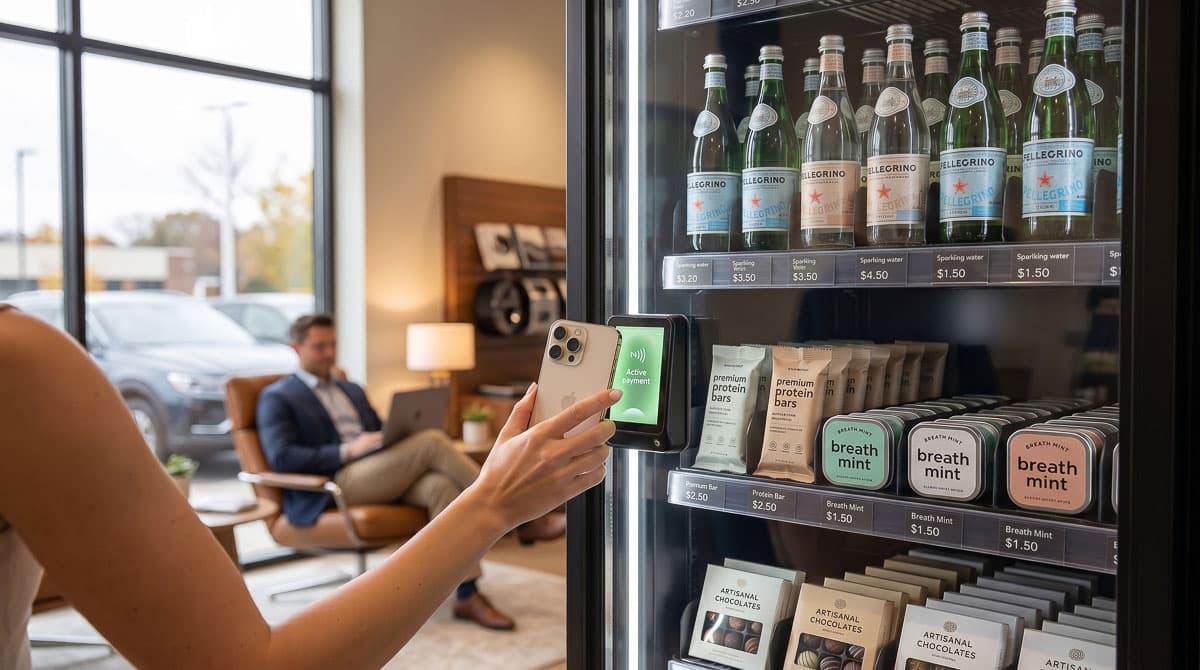
Cashless smart cabinet setup for comparing smart stores and traditional vending
Choose traditional vending only when the goal is a very basic machine footprint. Choose a smart store when presentation, cashless checkout, inventory visibility, assortment quality, and resident or tenant experience matter.
Direct Answer

What buyers need to know first.

Choose traditional vending only when the goal is a very basic machine footprint. Choose a smart store when presentation, cashless checkout, inventory visibility, assortment quality, and resident or tenant experience matter.

Smart stores support a more polished property experience

Cashless payments reduce staff and security headaches

Telemetry helps restocking follow actual demand

Traditional vending may fit only narrow, low-ambition use cases

Decision Table

Compare the practical tradeoffs.

Use this as the first-pass filter before a site survey confirms the right setup.

Decision factorSmart storeTraditional vending
PresentationAmenity-grade and property-facingBasic machine presence
PaymentCashless card and mobile walletOften mixed cash/card or older readers
InventoryRemote monitoring and demand dataOften route-schedule driven
AssortmentCurated and adjustableLimited by machine planogram
Best useResident, guest, tenant, and employee convenienceSimple low-touch snack coverage

The practical difference

Traditional vending is usually a machine-first solution. A smart store is an amenity-first solution. The distinction matters because modern properties are not only buying snacks and drinks. They are buying reliability, presentation, service, resident satisfaction, and a vendor relationship that does not create extra work.
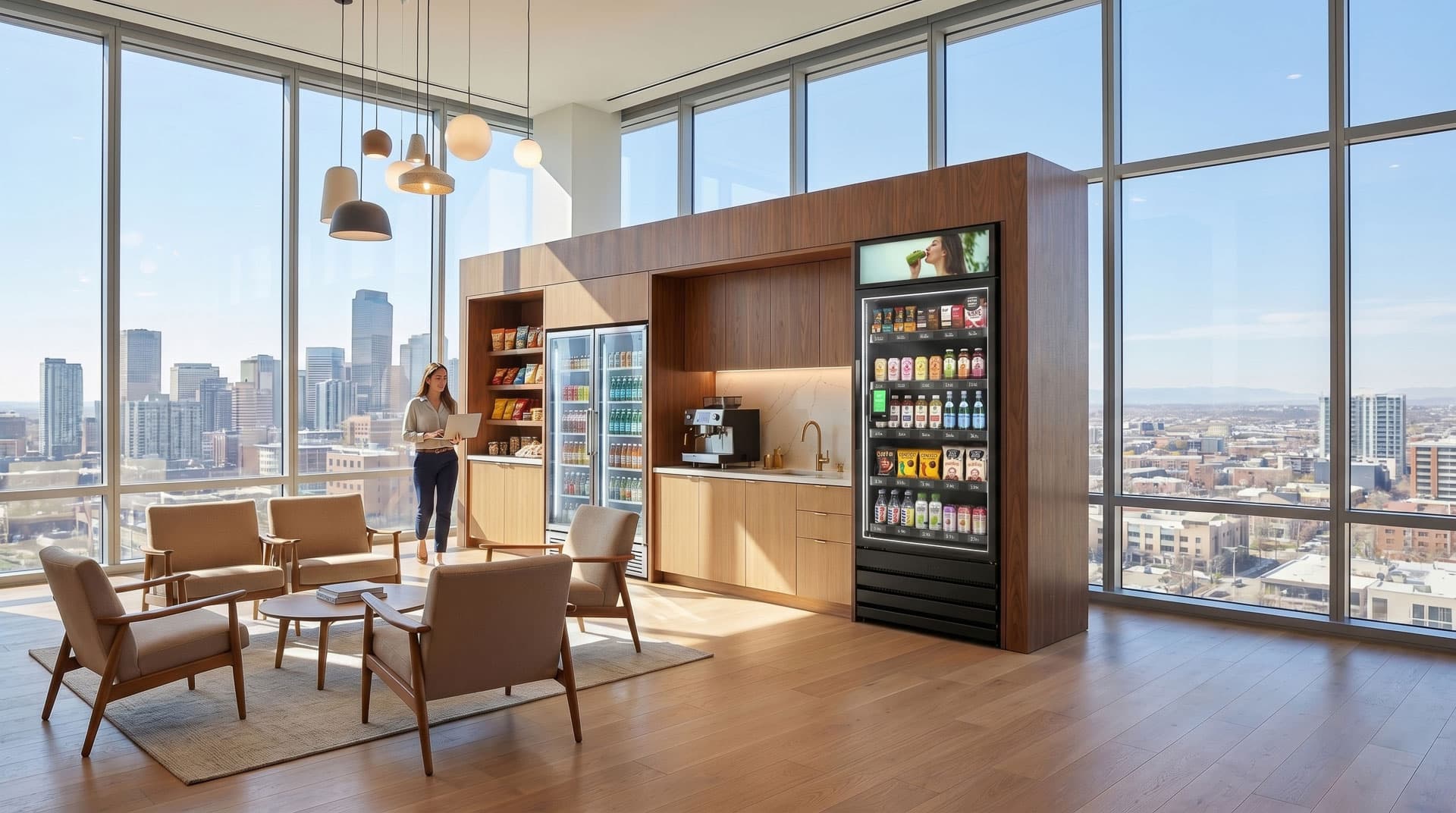
AI Vending smart store and micro market in a corporate office break room
Smart stores can look like an amenity instead of a basic machine placement.

When traditional vending is enough

A basic machine can be enough in a back hallway, warehouse corner, or low-visibility staff area where the property only needs simple snack coverage. It is less compelling when the placement is resident-facing, guest-facing, or part of the building experience.

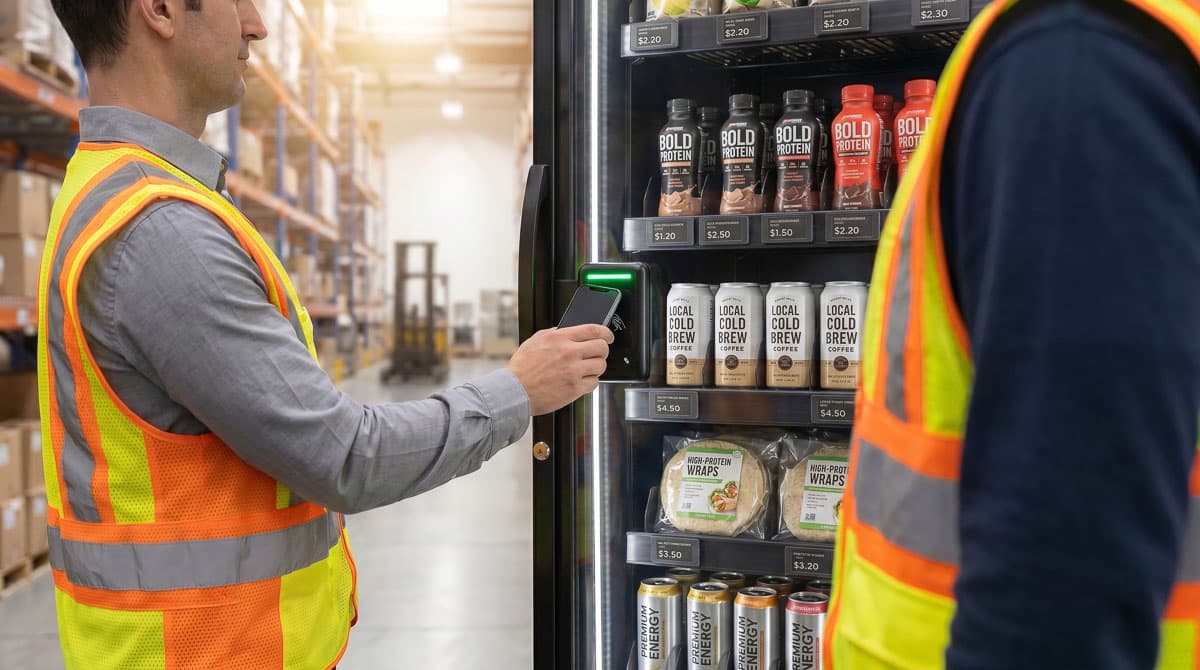
Warehouse employee using cashless smartphone payment at an AI Vending smart cabinet
Compact smart vending still works in practical staff areas when footprint matters.

When smart stores are the better decision

Smart stores are the better fit when the property wants a more current amenity, stronger product range, remote monitoring, cashless checkout, and a cleaner presentation. That is usually the case for apartment communities, hotels, office buildings, and mixed-use properties where the retail area is visible.

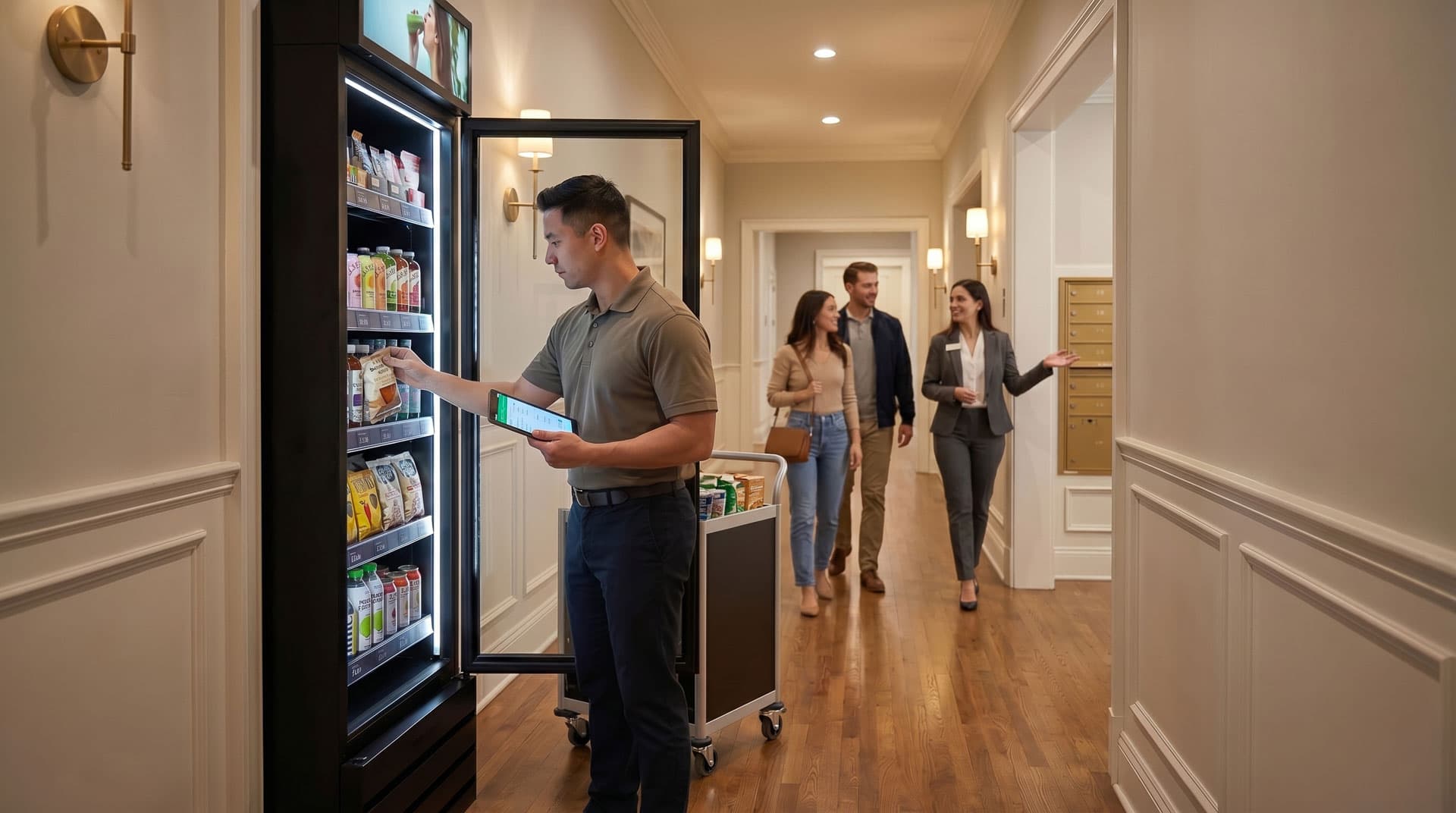
AI Vending operator restocking a smart store in an apartment corridor
Managed restocking and service are part of the difference from older machine-only programs.
Frequently Asked

Questions buyers ask before approving the program.

Answers are specific to AI Vending's managed smart-store, vending, and micro-market model.

Is a smart store just a nicer vending machine?

No. A smart store combines equipment, cashless checkout, remote monitoring, service, and product strategy into a managed onsite retail program.

When should a property keep traditional vending?

Traditional vending may be enough for low-visibility areas where the property only needs basic snack and drink access.

Do smart stores cost more work for property staff?

No. AI Vending manages installation, stocking, monitoring, maintenance, and support so property staff do not run the program.

Can a property start with one machine and expand later?

Yes. A property can start with a compact setup and expand if space, demand, and resident or tenant response support a larger format.