Vendor Checklist

Vending company checklist for property managers.

The right vending company should be clear about service ownership, stocking, support, payment technology, product strategy, and what the property team will never have to manage.

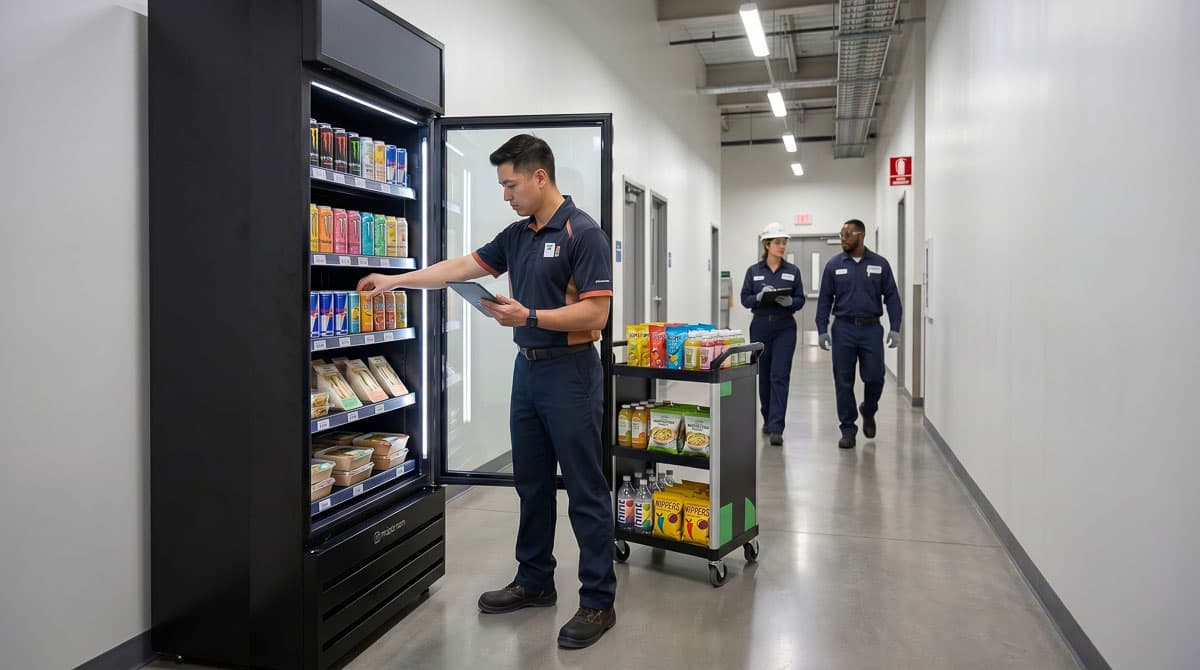
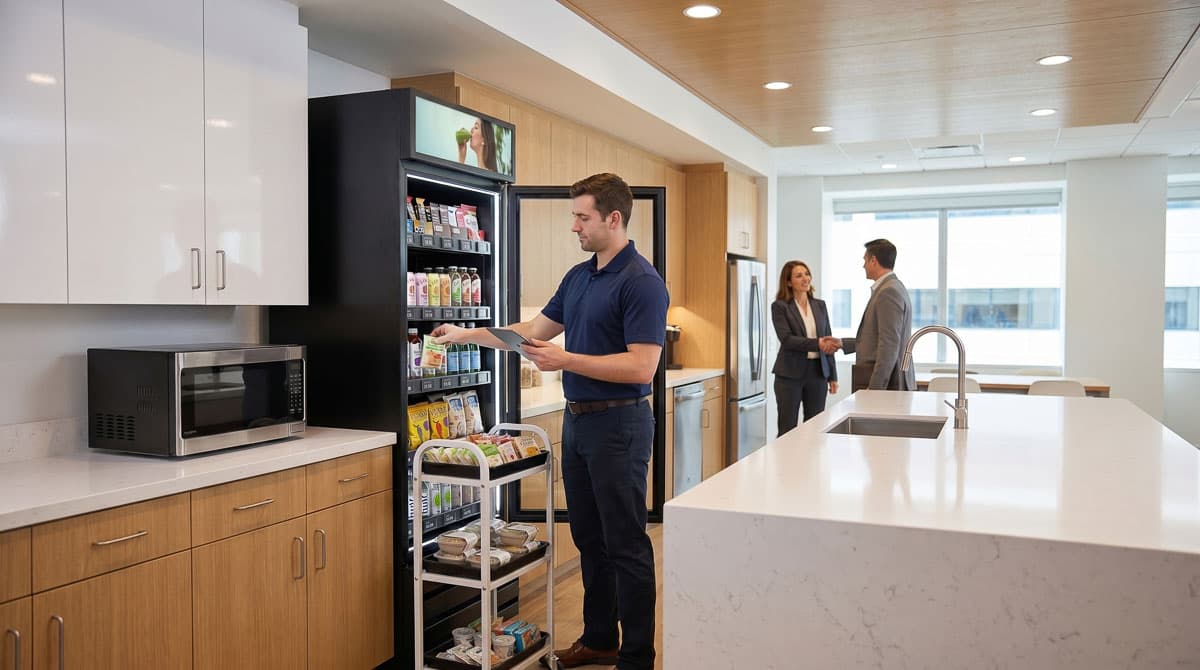
AI Vending operator restocking a managed smart store in a corporate office
Use the checklist to compare vendors on operational ownership, service response, product quality, payment model, reporting, installation process, and fit for the property audience.
Direct Answer

What buyers need to know first.

Use the checklist to compare vendors on operational ownership, service response, product quality, payment model, reporting, installation process, and fit for the property audience.

Clarifies who owns daily operations

Separates equipment claims from service reality

Helps compare smart stores, vending, and micro markets

Keeps buyer focus on resident, guest, or employee utility

Decision Table

Compare the practical tradeoffs.

Use this as the first-pass filter before a site survey confirms the right setup.

Checklist itemQuestion to askStrong answer
Service ownershipWho restocks and repairs?The vendor owns it.
Payment modelIs the setup cashless?Card and mobile wallet supported.
Product strategyHow does assortment change?Based on actual demand data.
InstallationWho coordinates launch?The vendor manages setup.
SupportWho handles user issues?Users contact vendor support directly.
ExpansionCan the program scale?Compact to larger formats if demand supports it.

Start with operational ownership

The first question is who owns the work after launch. A vending company should be able to explain exactly who stocks products, monitors inventory, handles payment issues, responds to service needs, and communicates with users.
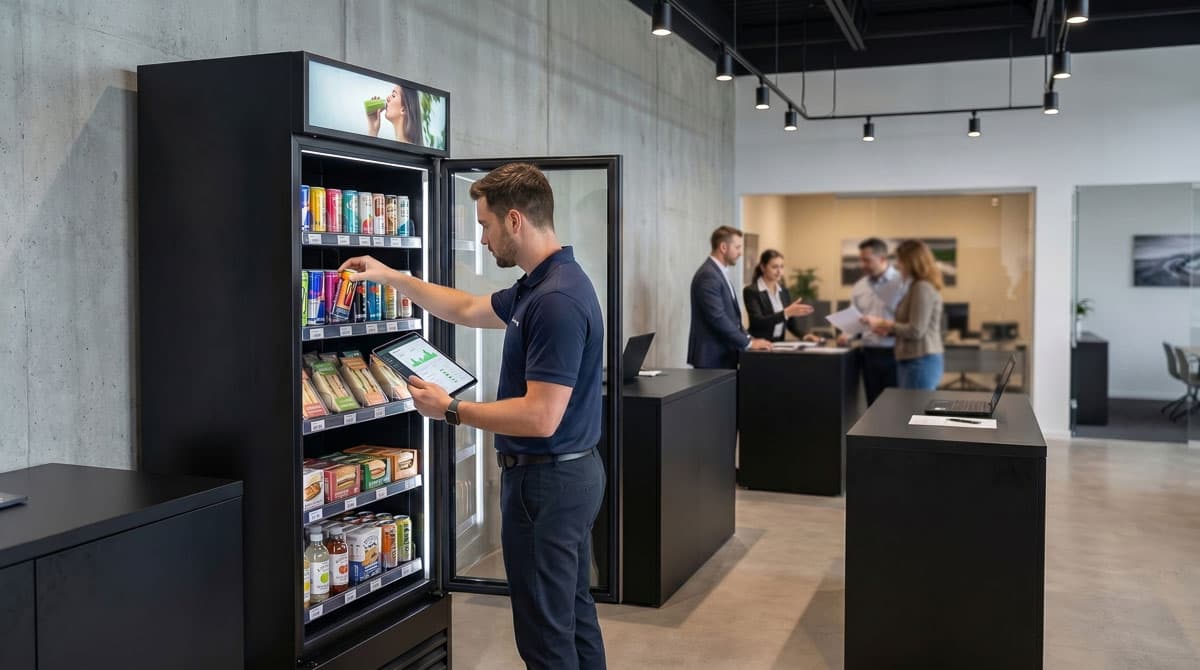
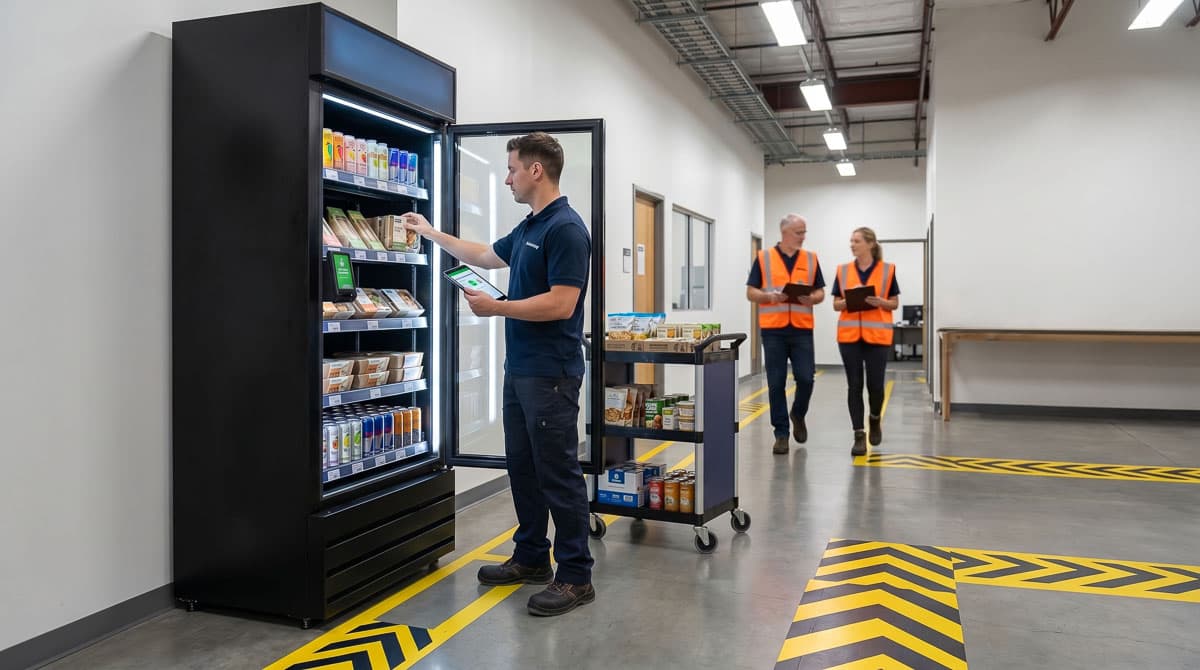
AI Vending operator restocking a multi-cabinet smart store in a car dealership service corridor
A strong vendor owns restocking and service across both customer-facing and staff-facing locations.

Evaluate the onsite experience

Equipment matters, but the experience matters more. Ask whether the program will look appropriate in the property, whether the product mix fits the audience, and whether support information is easy for residents, guests, employees, or customers to find.

AI Vending operator restocking smart vending in a warehouse shift-change corridor
Operational sites reveal whether a vending company can manage access, cadence, and reliability.

Check for hidden staff burden

A weak vending partnership pushes small problems onto the onsite team: stockout complaints, coin jams, refund questions, product requests, and maintenance follow-up. The checklist should reveal whether the vendor actually removes that burden.

AI Vending operator restocking smart vending in a manufacturing facility corridor
The checklist should separate equipment claims from the vendor operating model after launch.
Frequently Asked

Questions buyers ask before approving the program.

Answers are specific to AI Vending's managed smart-store, vending, and micro-market model.

What is the most important vending company question?

Ask who owns the day-to-day work after launch. If the answer puts stocking, support, or troubleshooting on property staff, the program is not truly full-service.

Should property managers ask about cashless payments?

Yes. Cashless payments reduce cash handling, coin issues, and reconciliation headaches for property teams.

How should a property compare vending proposals?

Compare the full operating model, not only the equipment. Look at installation, stocking, service response, product quality, payment technology, and staff workload.

Can this checklist be used for micro markets too?

Yes. The same ownership questions apply to smart stores, traditional vending, and micro markets.