Offices and Workplaces

Office vending and smart-store service for modern workplaces.

AI Vending supports offices and commercial buildings with zero-cost cashless onsite retail that gives employees and tenants quick access to drinks, snacks, meals, and essentials.

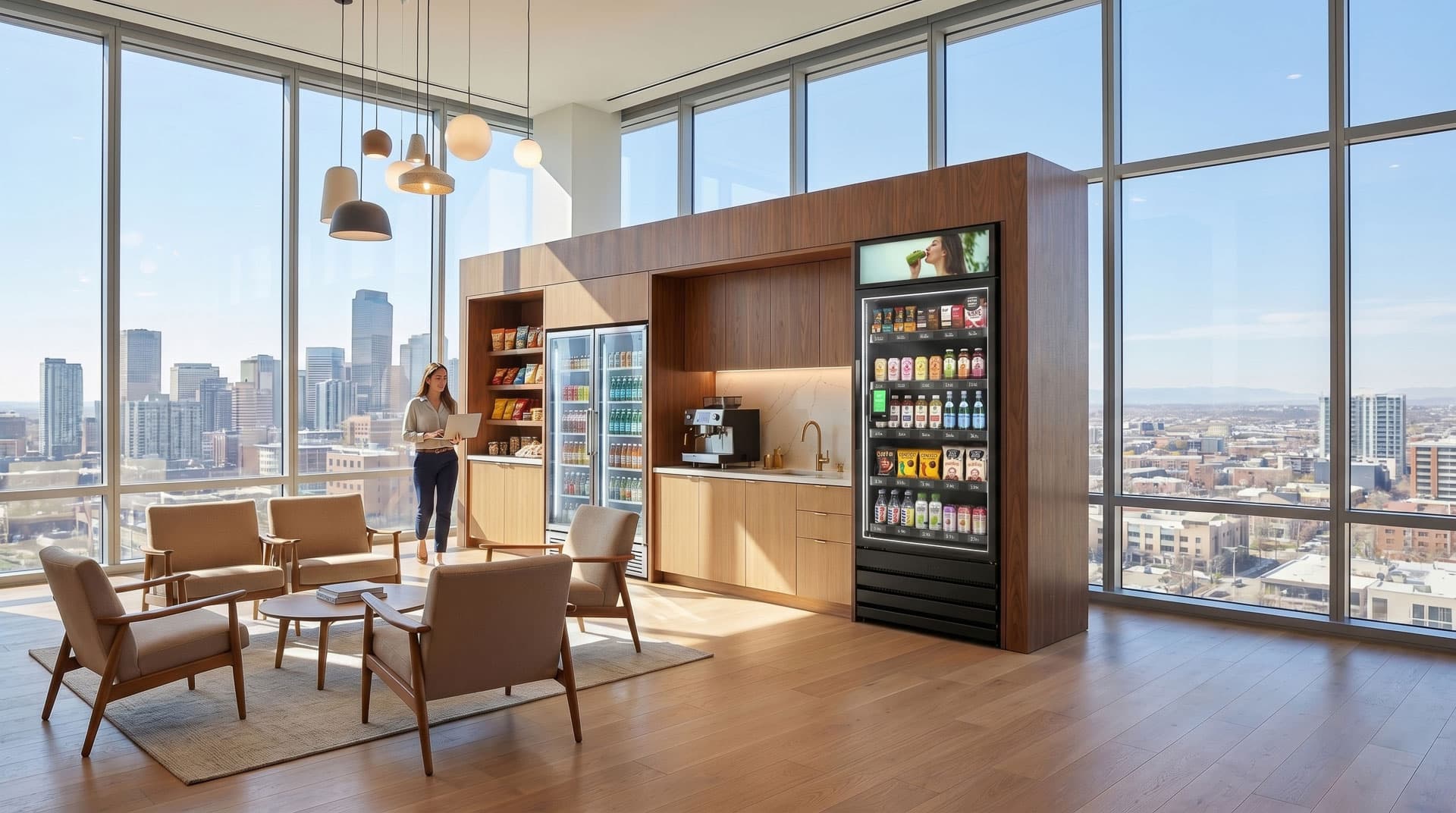
AI Vending smart store and micro market in a corporate office break room
Office vending works best when the program is sized to the workplace: a compact smart-store setup for smaller teams, a larger smart-store layout for tenant lounges, or a micro market for high-traffic offices. AI Vending manages qualified programs at no cost to the property.
Direct Answer

What buyers need to know first.

Office vending works best when the program is sized to the workplace: a compact smart-store setup for smaller teams, a larger smart-store layout for tenant lounges, or a micro market for high-traffic offices. AI Vending manages qualified programs at no cost to the property.

Zero-cost program model for qualified workplaces

Useful for breakrooms, lounges, and tenant common areas

Supports employees without adding office management work

Cashless payment and managed restocking

Assortment can adapt to workday demand patterns

Decision Table

Compare the practical tradeoffs.

Use this as the first-pass filter before a site survey confirms the right setup.

Office settingRecommended setupPrimary value
Small officeCompact smart-store setupUseful basics with minimal footprint.
Multi-tenant buildingLarger smart-store layoutShared amenity for tenant experience.
Large workplaceMicro marketBroader daily food and drink support.
Back-of-house staff areaOffice vending setupFast access during varied shifts.

What office teams need from vending

Workplace retail needs to be reliable, fast, and low-friction. Employees should be able to grab a drink, lunch item, or snack without leaving the building, and office managers should not inherit another vendor chore.

The right setup depends on headcount, hybrid work patterns, access hours, and whether the program is employee-facing, tenant-facing, or both.
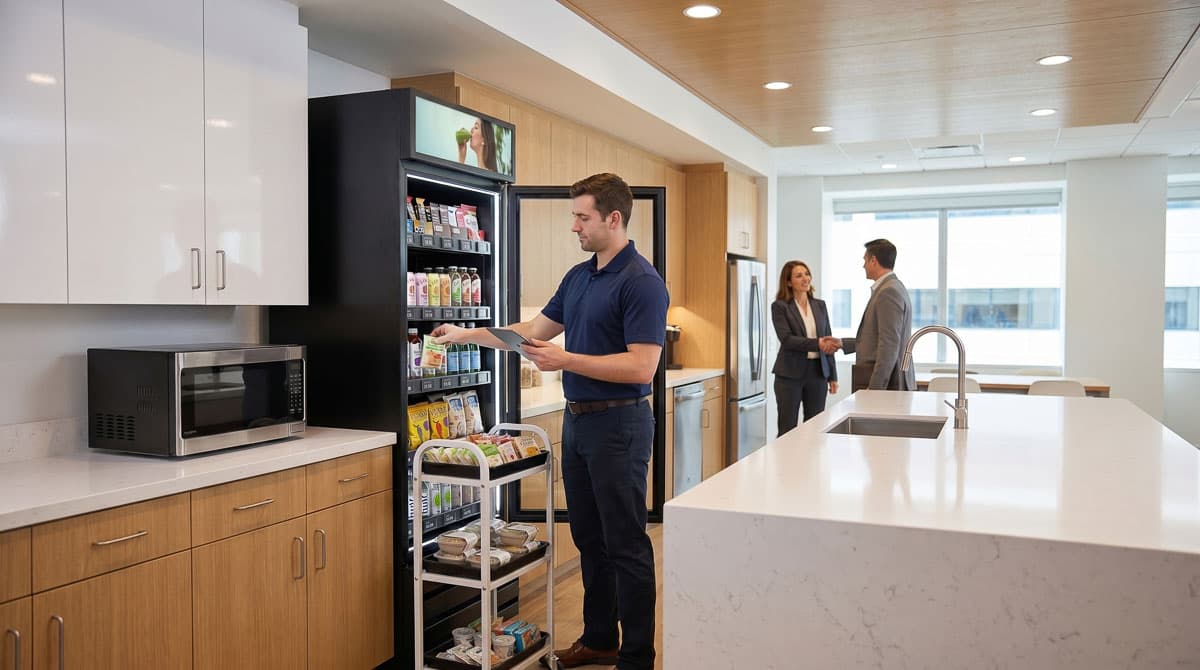
AI Vending operator restocking a managed smart store in a corporate office
Local service and restocking keep office programs stocked around real workday demand.

How AI Vending handles the operation

AI Vending manages payment setup, inventory, stocking, machine service, and product refinement at no cost to the property. The office team does not need to collect cash, report every stockout, or coordinate routine replenishment.

For commercial buildings, the program can support tenant experience by making common areas more useful throughout the day.

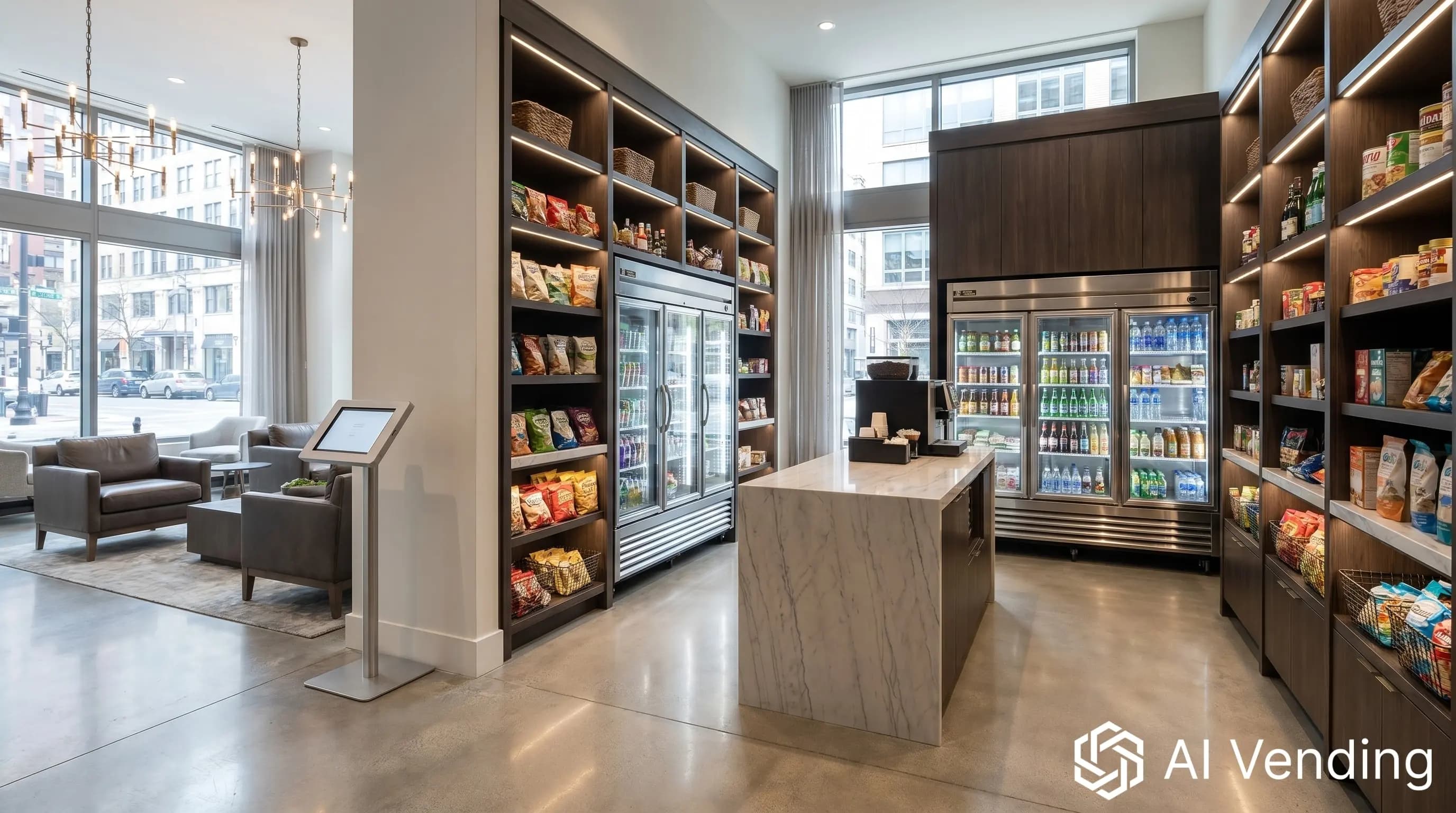
Luxury micro market installation with stocked coolers and retail shelving
Higher-traffic offices can expand from a compact setup into a broader micro-market footprint.

Good office placements

The best placements are visible without blocking circulation: breakrooms, tenant lounges, elevator corridors, lobby-adjacent convenience areas, and shared amenity spaces.

  • Breakrooms with steady employee traffic
  • Commercial lobbies with tenant access
  • Shared lounges in multi-tenant buildings
  • Back-of-house areas for hotel or operations teams
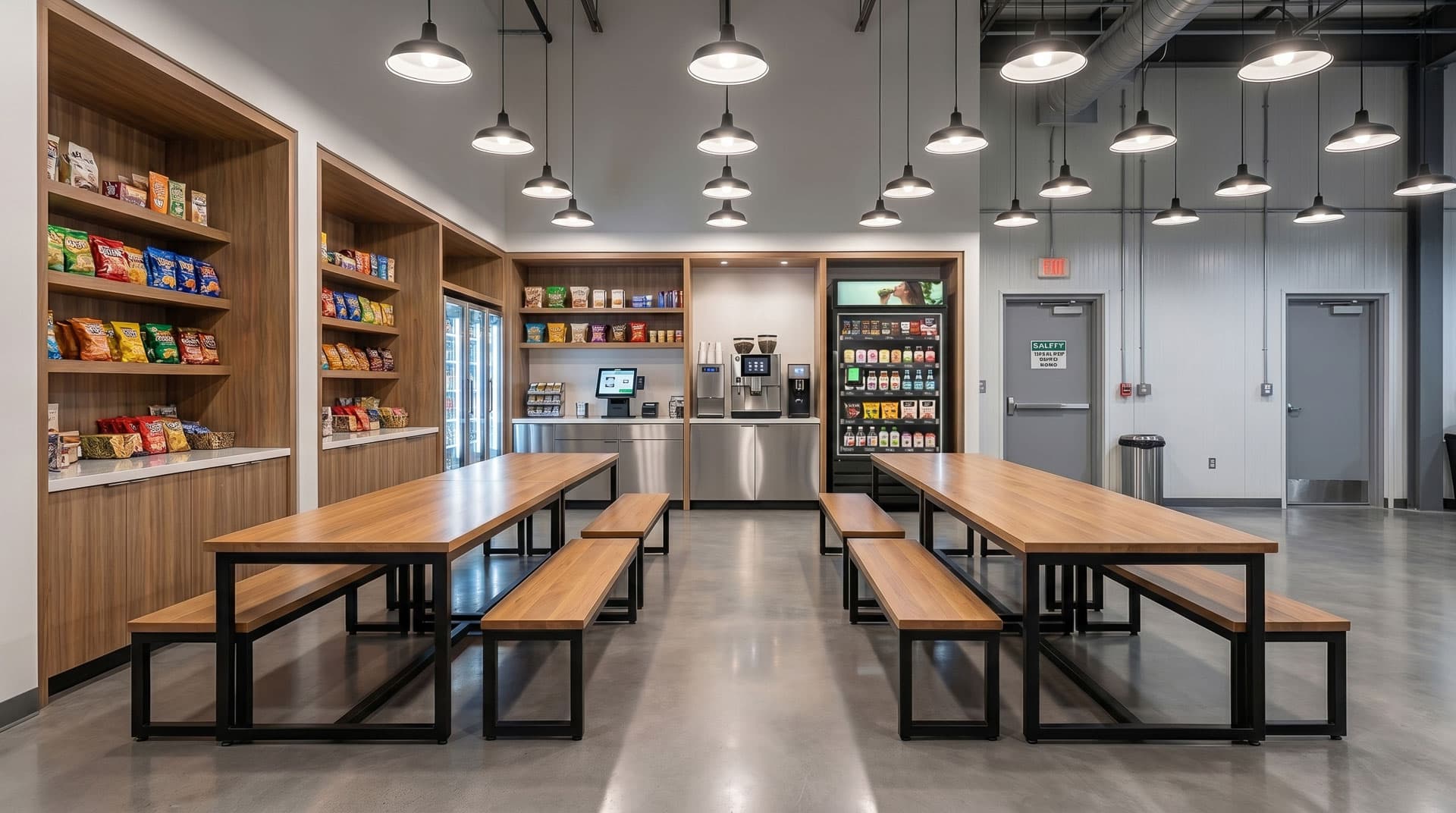
AI Vending smart store and micro market in a manufacturing facility break room
Workplace programs can be adapted for employee breakrooms, operations teams, and shift traffic.
Frequently Asked

Questions buyers ask before approving the program.

Answers are specific to AI Vending's managed smart-store, vending, and micro-market model.

Does office vending require a long setup process?

No. AI Vending starts with a site survey, confirms placement and access, then coordinates delivery, setup, stocking, and launch.

Can office vending support hybrid workplaces?

Yes. The product mix and restocking cadence can be adjusted around actual demand instead of assuming every weekday has the same traffic.

Who responds if a machine has an issue?

AI Vending handles support and maintenance. The office team is not expected to troubleshoot payment, inventory, or equipment issues.

Can a workplace add a larger micro market later?

Yes. Many properties can start compact and expand if demand, space, and traffic support a larger retail format.